





What size/ design did you choose?
One of the benefits of aquaponics, is that YOU decide what will work for where you live.
Only YOU know YOUR needs.
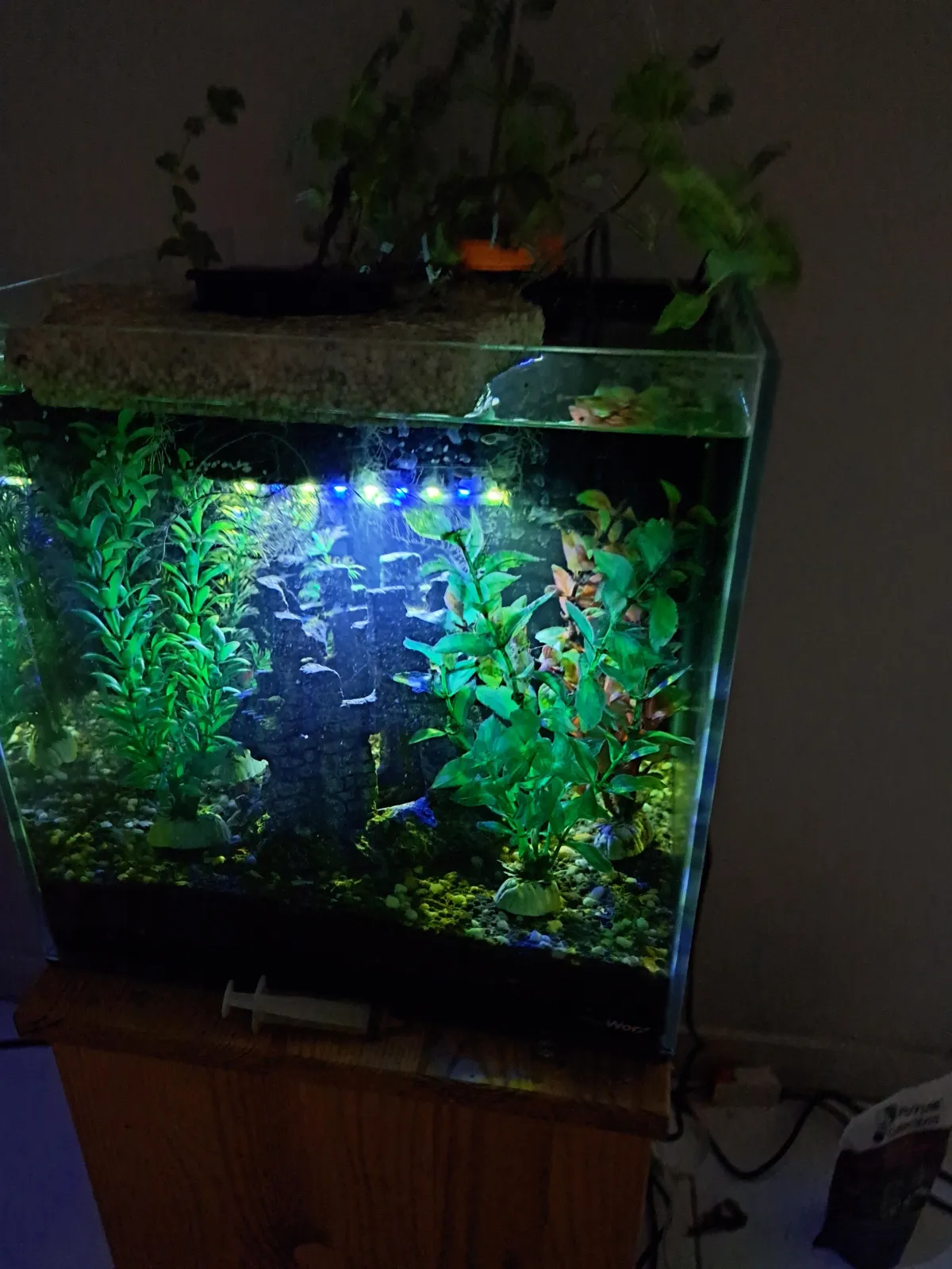
I always suggest to people to start their aquaponics journey small. Did you see on the slide pack the small indoor aquarium aquaponics system?
In a fish tank of 30cm x 30cm, I’ve got some herbs growing. That is very small, and you can do it with any size freshwater aquarium. Convert it over.
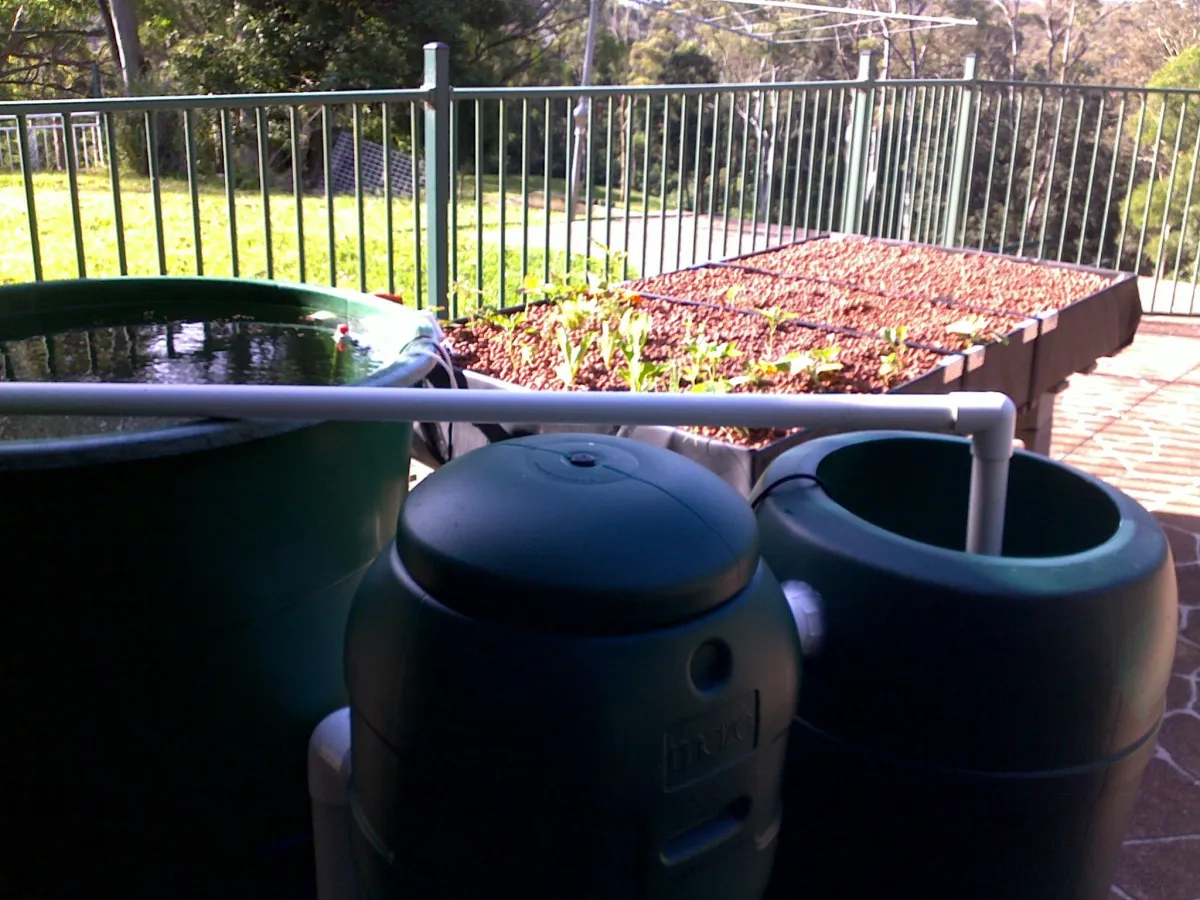
Or perhaps something small outside by your back door will suit you?
The small blue courtyard system is by my back door, growing most of my herbs and greens in a 1m x 0.75m space.
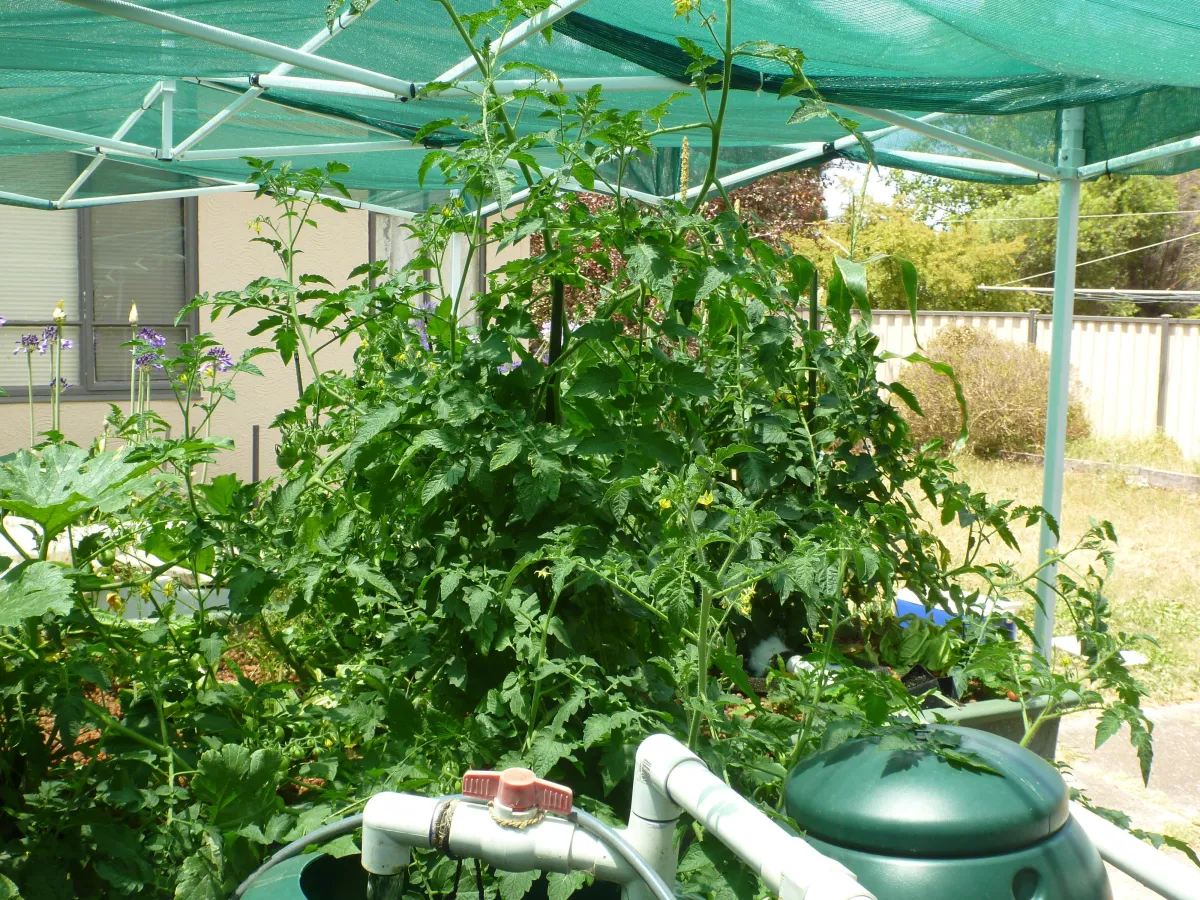
Then larger still, though I recommend that before you go too big, you get used to how it works.
Your Climate and Making it Work
There’s no doubt about it, everyone’s climate is different and unique.
Having lived in 4 different states within Australia, and having aquaponics systems in all of them, I promise you, they all had to vary to cater for my LOCAL climate.
What is your climate like?
Cold? Hot? Dam cold? Humid?
What are the challenges?
To make your aquaponics system be successful, you need to understand your climate.
For instance, when I lived in the perfect weather in New South Wales, it didn’t matter what I grew veggie or fish wise (no trout or barramundi though) as the weather was perfect. No real storms, no real humidity and we didn’t own a heater in the house. Perfect.
Yet Victoria was dam cold. I grew Silver Perch, and in winter I had to make sure the tanks were insulated. A better option would have been a small hot-house to keep the fish happy (unless in winter I grew trout or goldfish).
Then when I lived in Queensland, the humidity, the heat, and the storms. Wow, I really got to know Australia. I had to keep good air flow through the plants when it was humid to avoid fungal issues, and have a shelter of some description for the storms and flooding.
Then in ACT, back to freezing, but worse than Victoria.
Every space has it’s challenges and you need to be able to identify the climate, and plan for it.
How hot does it get where you are? How Cold? What is the balance?
Are you getting enough sunlight for your veggies (ideally 6-8 hours per day).
Indoor Aquaponics

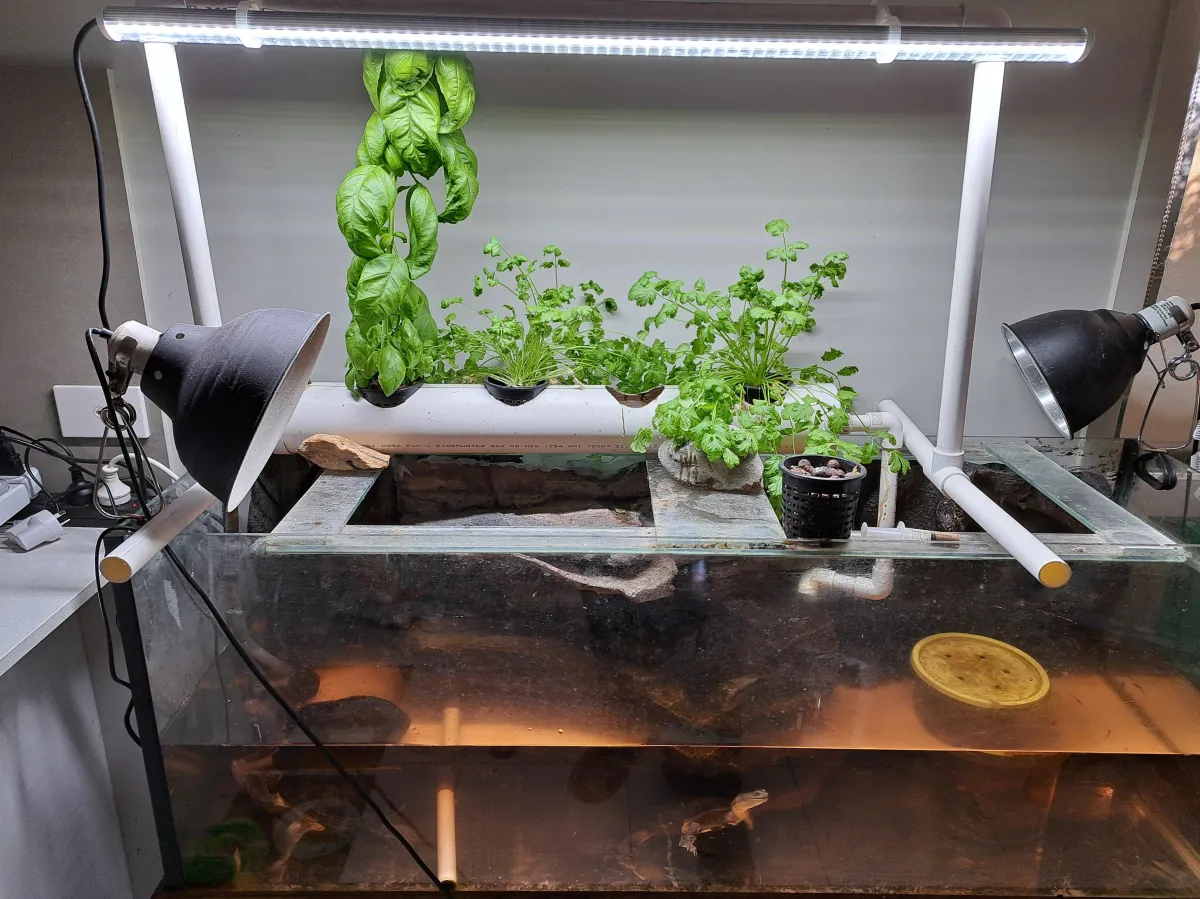
Have you chosen to do aquaponics inside, which gets rid of most of the weather and climate issues ~ you need to still get light for your veggies.
Now, the most common thing people use is a glass fish tank for their fish. You want to see your fishies right?
You will still to have light for your veggies, this can come from one of two places.
The sun or a grow light.
Whichever you choose, I have 1 critical piece of advice for you. Don’t have your glass fish tank in direct sunlight, or the light from the plant growing light.
You see, when you have water, light and fertiliser (the fish waste), you will get algae ~ turns everything green. You need the light and fertiliser for the veggies, however if the light goes into the fish tank, green.
This is where I keep the fish tank away from the growing light, and away from the window, but keep the veggie area in the light.
Courtyard Aquaponics
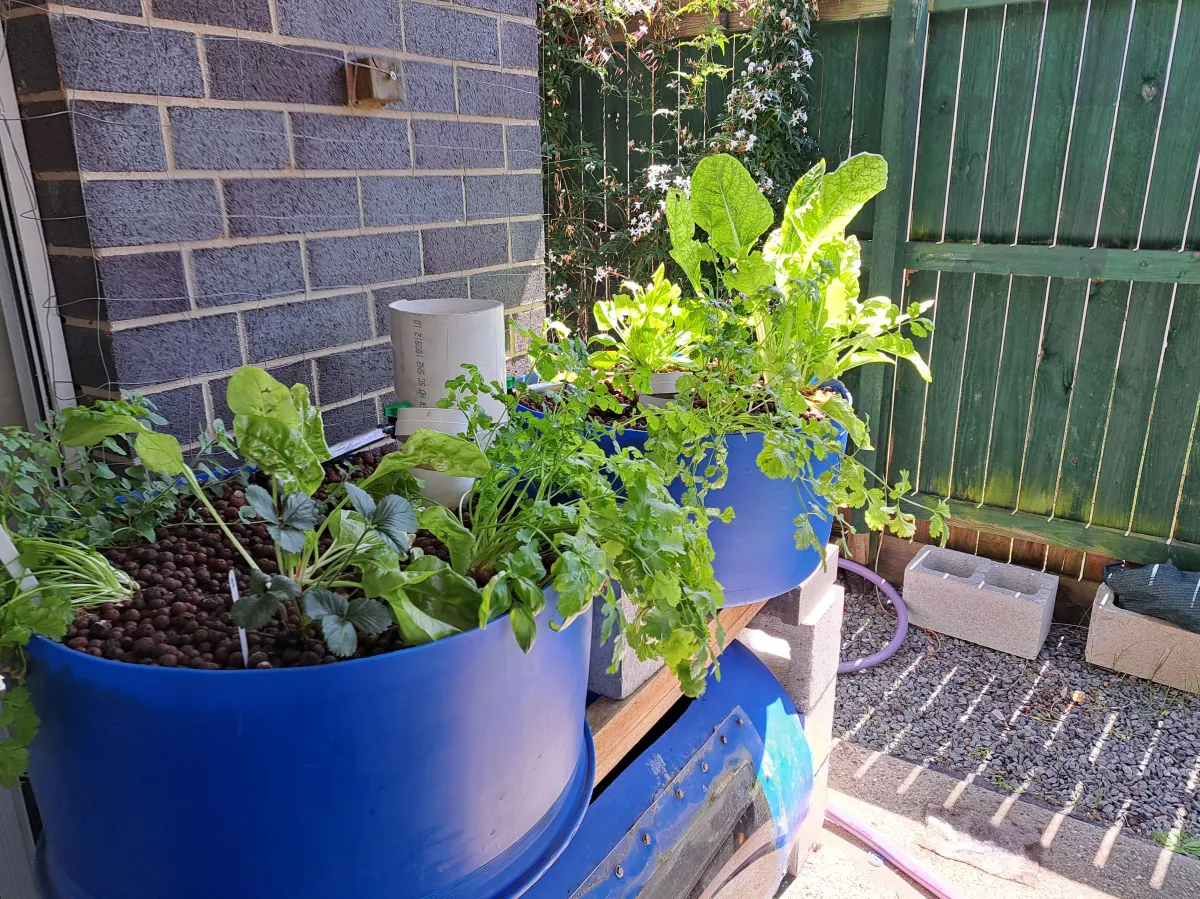
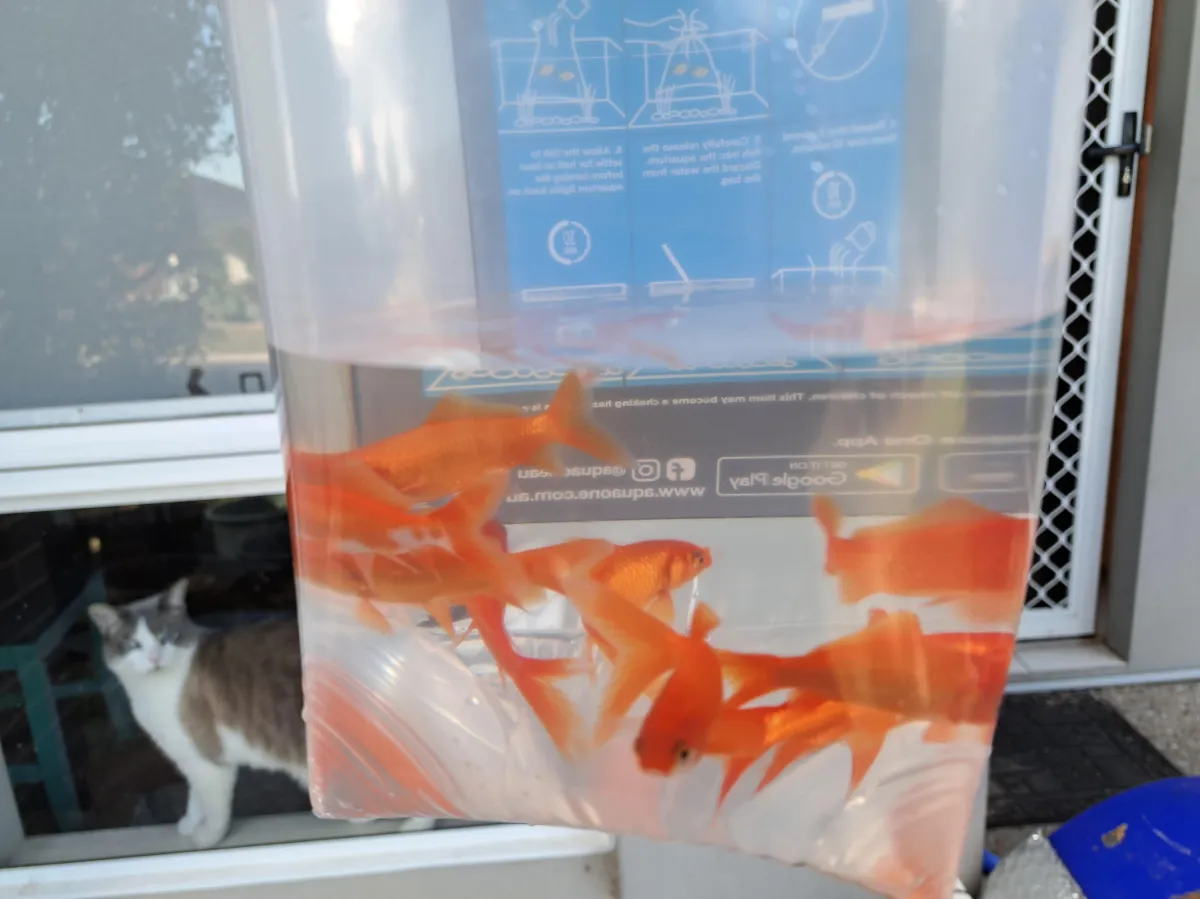
What is super important within the Courtyard Aquaponics system, is that you keep the fish to space ratio.
We must have filtration happening, both mechanical and biological, and with this design you have both.
In the larger system, the fish ratio is based on the filtration, however in this design, as there is heaps of filtration, it is based on space within the fish tank (bottom)
With this type of system, you need to keep some type of gold fish to produce waste for the veggies. These could be guppies, gudgeons, or goldfish.
Be sure to ask your local aquarium shop how many fish you can have within that size drum, as it will vary depending on the size of the fish.
This is such a simple and affordable little system to build that can grow quite a lot in a small space.
Larger Growbed Aquaponics System
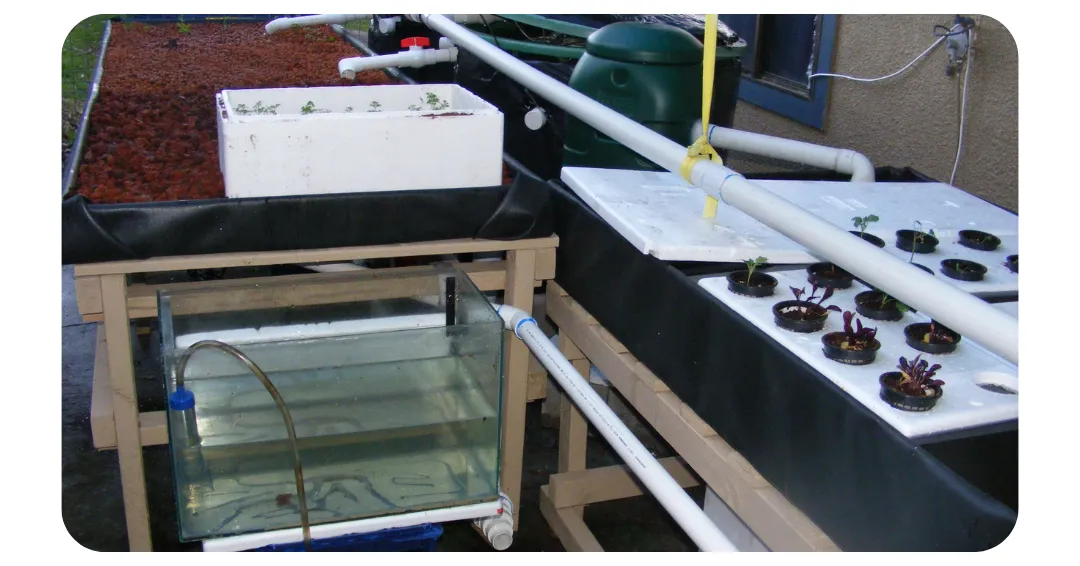
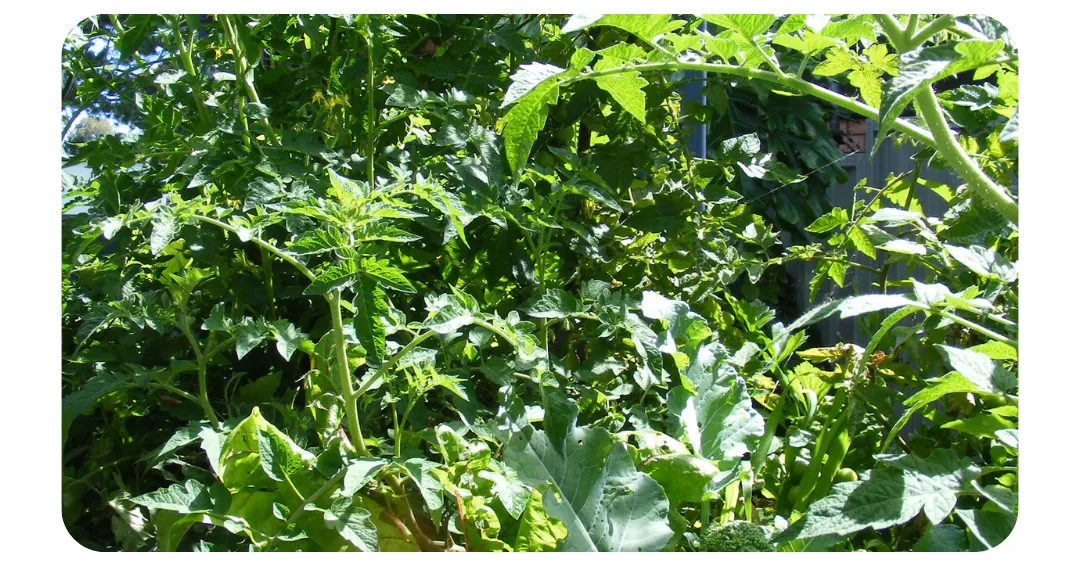
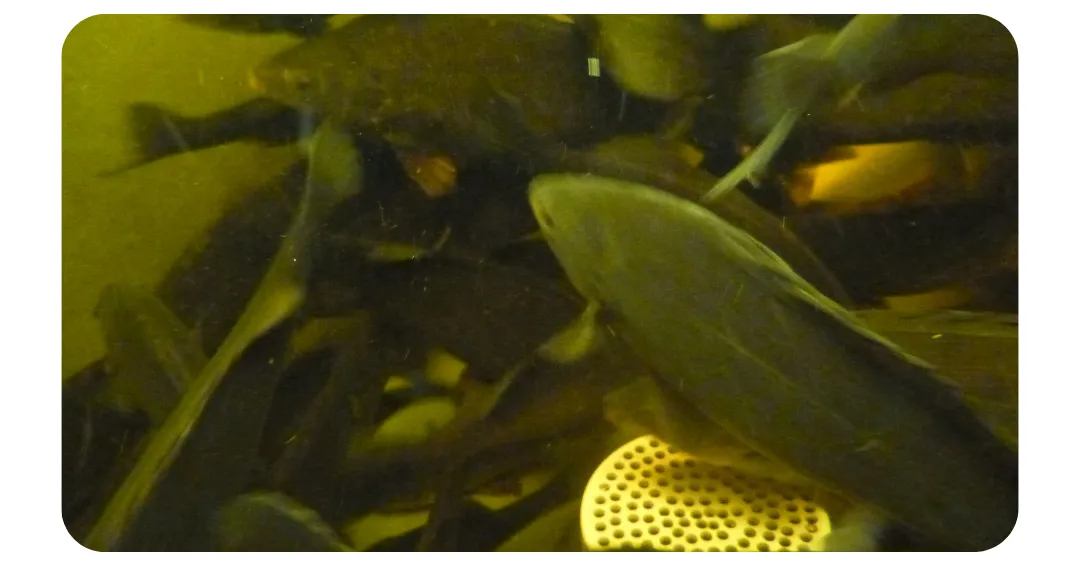
A great sized system that can feed the family (and neigbours), where you have the choice to grow fish as pets to fertiliser your veggies, or fish to eat as well as fertilise your veggies.
If you choose this size system, the best advice I have is to keep it simple.
Don't over complicate it.
And make sure you know your climate and weather extremes, so you can build a cover/ hothouse or greenhouse if needed.
A way to reduce the costs of this system, is to buy second hand expanded clay (growing media - next page) and wash it thoroughly ~ it is the most expensive part, so this can keep costs down.
You can always use scoria (volcanic rock) instead of the expanded clay as it is cheaper, though it is much tougher on the hands and a pain to clean. But it is cheaper.
Copyright 2023 | Candy The Aquaponics Lady | All Rights Reserved Email: [email protected] Queensland, Australia