





Your Free Online Aquaponics Essentials Course
Congratulations on deciding to create you own FOOD SECURITY within your backyard with Aquaponics.
This is a free course to give you a basic understanding of what aquaponics is, and how it works, and what type/ size aquaponics system can work for you.
What is Aquaponics?
Aquaponics is the harmonious man-made ecosystem of growing fish and veggies together where the fish provide fertiliser for the veggies, and the veggies filter the water for the fish.
An ecosystem that you can create in any space, indoor or outdoor. It saves water and grows your veggies four times faster in a healthy way
Some short videos helping you understand HOW each part of aquaponics is interconnected
Part 1: Making Aquaponics an Ecosystem (5min)
Part 2: Where do the fish fit in? (5min)
Part 3: The Gold in Aquaponics, the Bacteria (5min)
Part 4: Where do the Plants Fit In? (7min)
Some Aquaponics Inspiration (10min)
Here are 3 common and basic Aquaponics designs & WHEN you would choose them
You get to choose what aquaponics design works for you.
An Indoor Aquarium Turned Aquaponics Design
When you only have room inside, turn your aquarium into a food growing opportunity
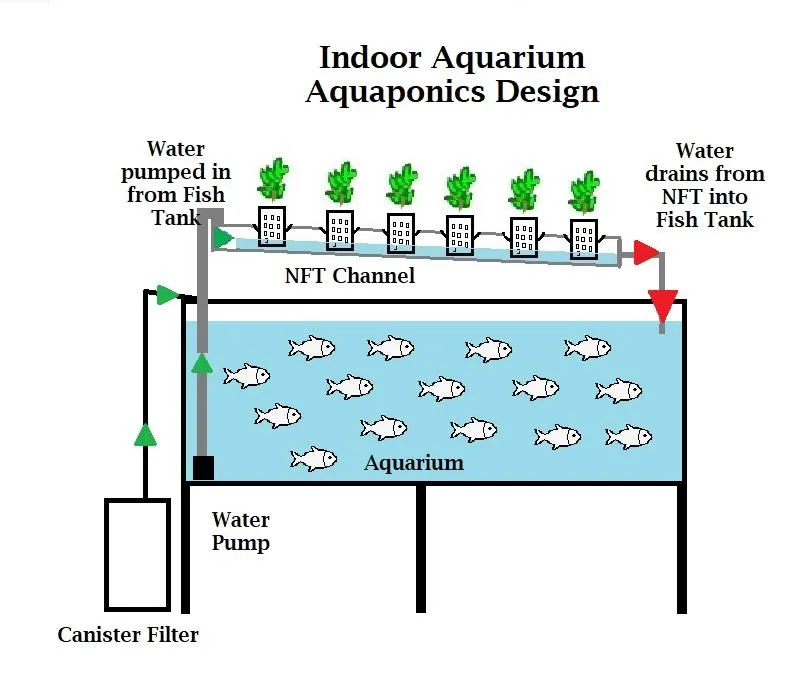

The idea here is to be able to use an existing freshwater aquarium (or turtles) to be able to grow a few herbs and greens. Using the established filter, or a separate filter and build an NFT (Nutrient Film Technique) - PVC piping - as your vegetable growing space.
This is the cheapest type of vegetable growing system, and perfect for indoors as it is not as heavy as a growbed.
For most larger (200L) aquariums, you have an established canister filter than has both the mechanical and biological filtration occurring, and you need to siphon any waste out of the tank.
With the addition of the NFT vegetable growing area, you don't need to do water exchanges to remove the excess nitrates as the veggies will do that for you.
A nice way to have your relaxing fish, and some healthy herbs or greens.
Pros and Cons of Indoor Aquarium to Aquaponics Design
Pros
Cheap and easy to build
Great for growing the herbs you use to cook with
Great to ‘test the water’
Can use it on any size, freshwater aquarium
Removes the need to do weekly water changes on an existing fish tank
Great as a school project for the kids
An excellent way to get started
Can build in an hour
Easy to maintain once you learn how it works
Cons
Limited in what type of veggies/ herbs you can grow
Limited in the amount of veggies/ herbs you can grow (base it on nitrates available from the fish)
The herb roots can get too large and block the flow of water
Balancing the NFT channel on the fish tank (make sure stable and safe)
You need to have a veggie grow light inside, or placed near a window
If placed near a window, the glass aquarium will get algae growth (grows using the nitrates you want the veggies to use)
Temptation to over plant, or add too many fish for the space to grow more
What can you grow in this design?
This design is only for seasonal herbs, lettuces and spinaches.
This includes basil, coriander, small herbs like oregano and thyme.
Any vegetable that doesn’t grow big or flower.
Larger vegetables that are heavy can easily fall over and collapse. And vines like pumpkins aren’t suitable inside either
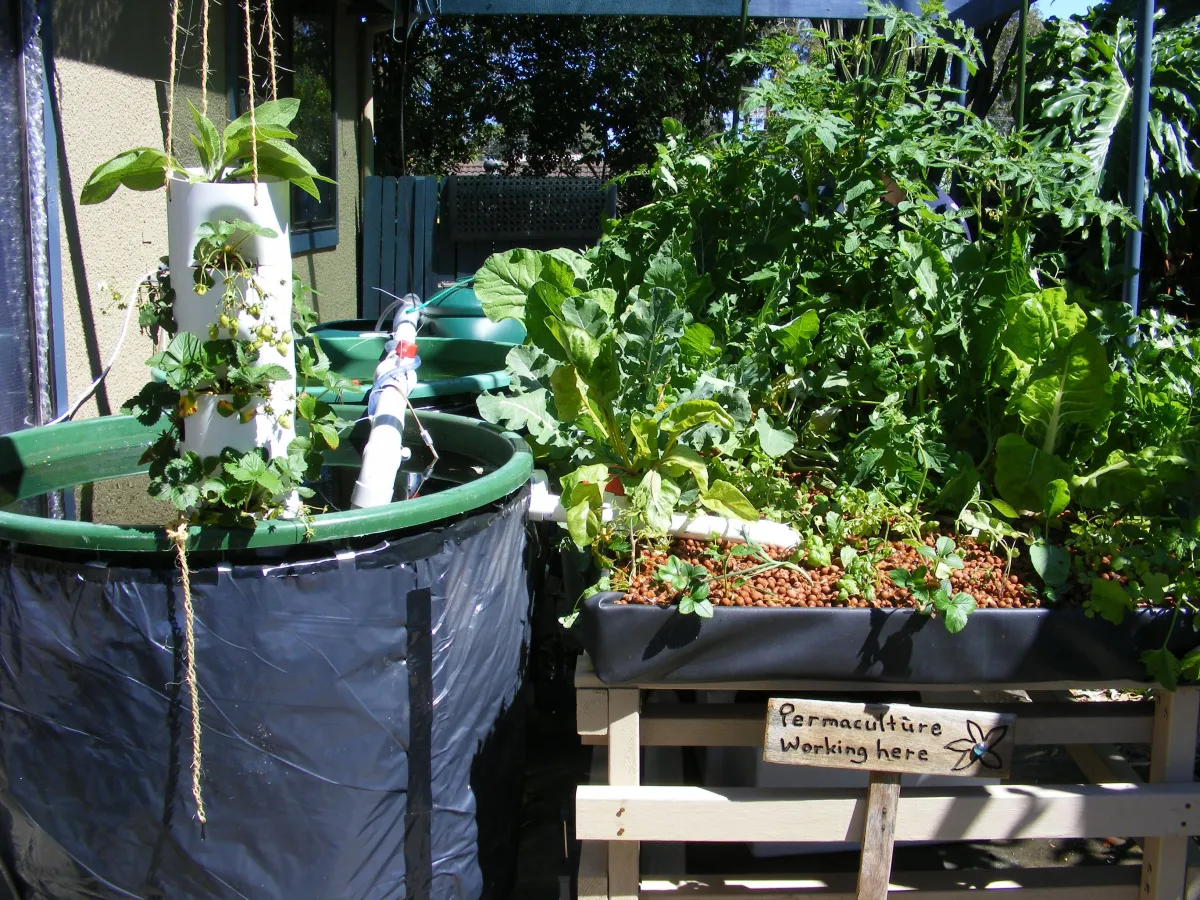
Small Courtyard Aquaponics
Perfect for a small spaces and courtyards
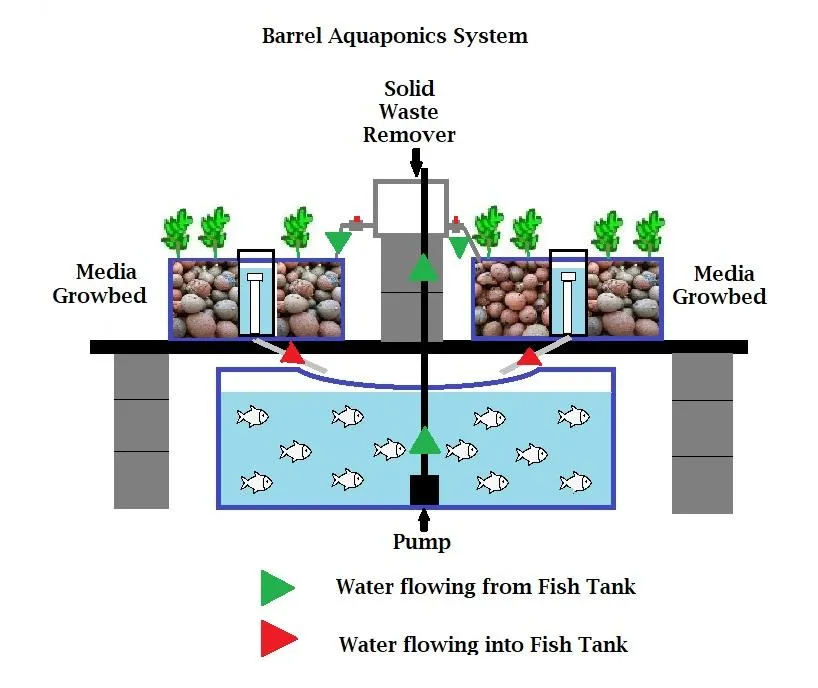
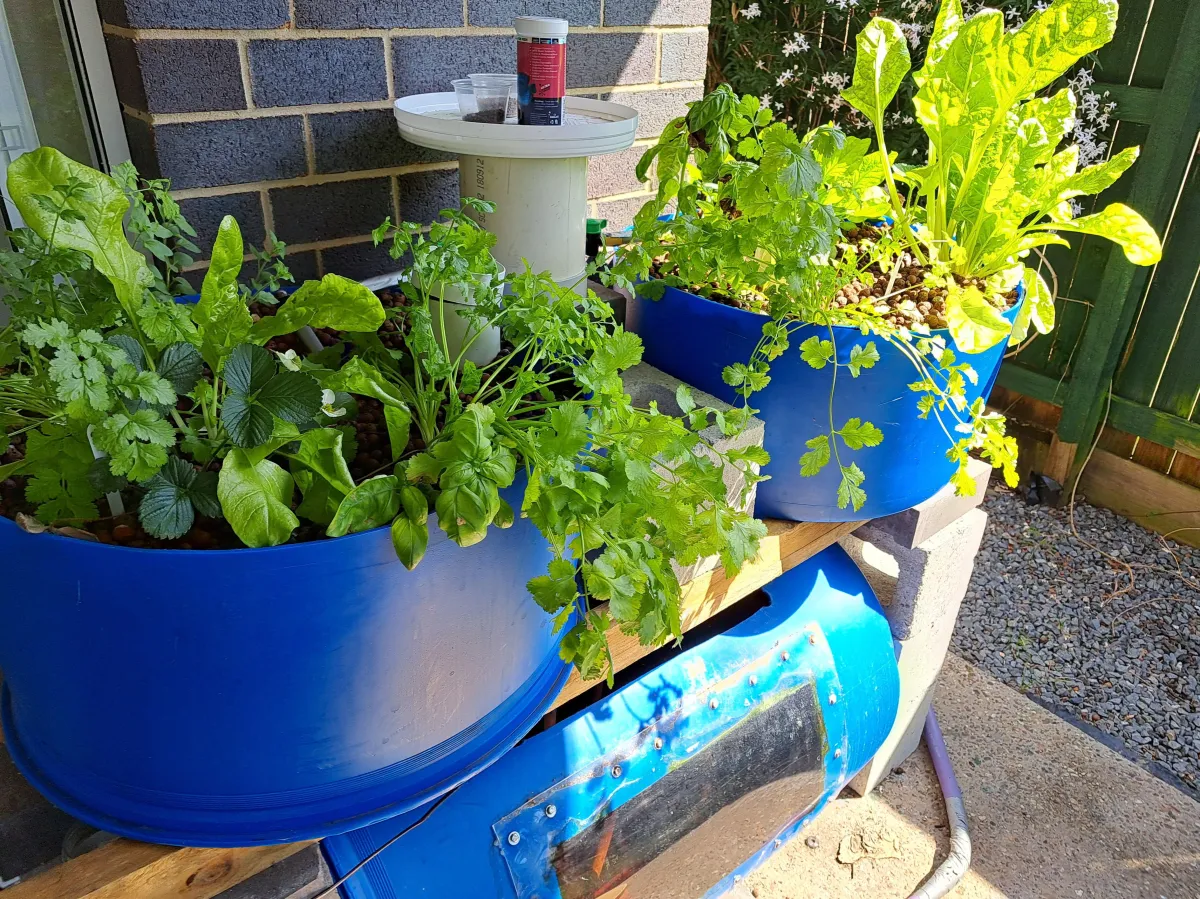
It only takes up approx. 1m long x 0.5m wide x 1m high.
An easy to build and maintain, cheap system that you can build using second hand parts.
Great for kicking the tyres, getting started or growing what you want in small spaces.
As you can see, it grows quite a lot in that small space.
Pros and Cons of a Simple Courtyard Aquaponics System
Pros
Perfect for small courtyard areas
A great way to really kick the tyres and preparing you to expand and go bigger
Can grow more veggies than inside
Can have a few creeping plants like cucumber
Can have more fish (still ornamental)
Fairly cheap to build, easy to get materials for
Can build in a couple of hours
Easy to maintain once you learn how it works.
Cons
Must make sure second hand materials are safe (food grade and UV stable)
Expanded clay (pebbles veggies grow in) is expensive
Must make sure the structure the growbeds are on is strong and stable
Limited with what you can grow (flowering plants struggle with not enough fertiliser)Limited with how much you can grow
Easily over stock with fish or plants
What can you grow in this design?
A small courtyard aquaponics system is a great way to ‘kick the tyres’ when you are wanting to go bigger.
You get the really feel and learn about how aquaponics is an ecosystem, and how it flows.
You can grow more veggies within it, though still limited by space and fertiliser.
Veggies like tomatoes, capsicums, strawberries, and other fruiting plants can grow as they have good root structure in the expanded clay, what you grow needs to be based on the amount of nitrates available.
Any herbs, fast growing veggies, even root crops like ginger, beetroot and turmeric grow in this design (if you set it up with a bell siphon so you get a flood and drain ~ see book for more info!), though ginger and turmeric take 9 months to grow.
If you have room for vines and creepers to spread, this aquaponics system will support the root structure and growing, based on your nitrate availability.
Larger Aquaponics System
This is very much a 'next step up' type of aquaponics system, especially if you are new to aquaponics and DIY.
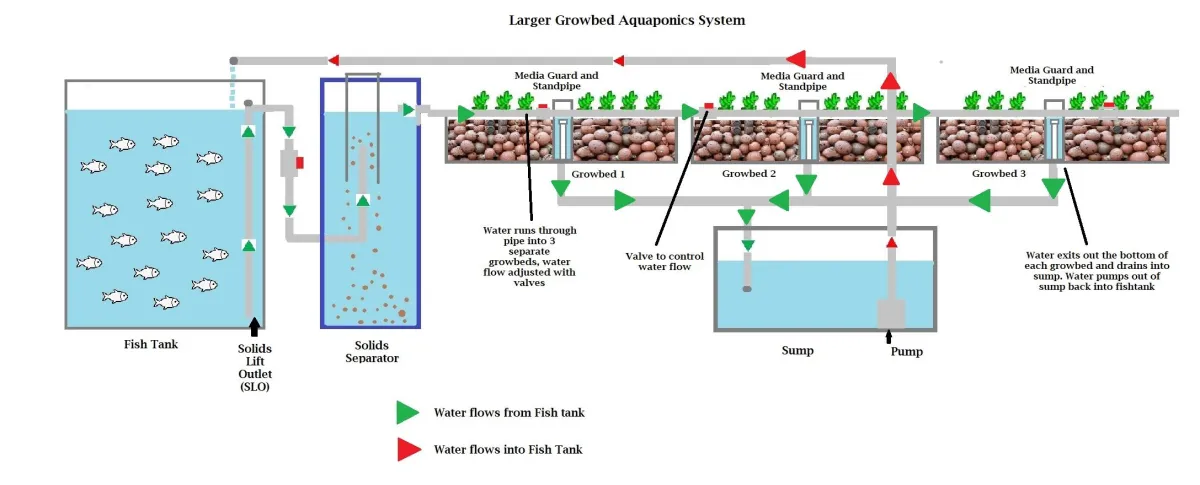
It's perfect to have this as your goal.
It is a huge learning curve to build this size, and well worth the effort.
Many people build this size when they want to grow and eat their fish. Personally, I've been running this size and bigger for more than 14 years, and I've never eaten my fish. So, if you are someone who wants to grow lots of veggies, then look for fish that are best suited for your climate, and you will enjoy as pets (community type fish).
The easiest way to build and run a larger system like this, is to keep each component separate, and make sure you understand the function of each part.
A perfect system to feed the family. The picture above was one of my first systems, in a 4m x 8m courtyard of a rental property.
Pros
Create the size to suit your needs
Be creative with the design, while following some fundamentals
Can build fairly affordably if go second hand
Can grow almost anything you like
Food security for you and the family
Eliminate fresh veg from your shopping list
Grow edible fish if you choose
Can build anywhere you have the space
Can grow a lot more food
Cons
Need the room to be able to build
Need to make sure you have it setup in the right order and flow
Can be expensive to buy parts new, expanded clay is very expensive
Easy to make mistakes if you don’t have experience with a smaller system
Costs a bit more to run
There is a big learning curve, especially if you are starting new
If keeping edible fish, you have the added stress of system failure and losing your protein source (can still keep fish as pets, though with a larger tank, the type of fish you keep and how many will change)
Fish food for edible fish is more expensive
What can you grow in this design?
With the larger system, you are limited by your imagination and what you like to eat.
You can grow almost anything, you simply need to cater for the plant needs.
For instance, if you want a fruit tree, add on an extra growbed (drum) and contain it that way.
Best system as you can have almost complete food security depending on what you eat, and how.
You can continue to expand a system, make it bigger once you get the hang of it.
All fruiting veggies and herbs (not mint, rosemary or lavender) can grow easily within this system, including your root crops.
Copyright 2023 | Candy The Aquaponics Lady | All Rights Reserved Email: [email protected] Queensland, Australia