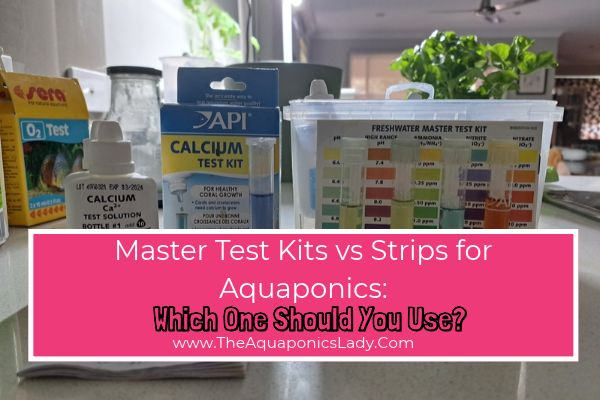
Master Test Kits vs Strips for Aquaponics: Which One Should You Use?

Choosing between master test kits and test strips for aquaponics can be confusing, especially when you're just getting started. Let's compare their accuracy, cost and ease of use to help you decide which water testing option is best for your system.
Why Water Testing Matters in Aquaponics
Testing your water is one of the simplest and most powerful ways to keep your aquaponics system healthy.
Even if your plants look fine and your fish seem happy, water quality can change quickly—and by the time fish show stress, it’s often too late.
Water testing is particularly important when you're first cycling your aquaponics system, as ammonia and nitrite levels can change while beneficial bacteria become established.
Regular testing helps you:
Catch small problems before they become big ones.
Prevent fish stress and disease.
Keep your bacteria colony stable and your plants thriving.
But when you start looking for test kits, you’ll quickly find two main options: dropper (master) kits and test strips.
Do Aquaponics Test Strips Work?
This is one of the most common beginner questions in aquaponics groups:
“Can I just use the cheap test strips?”
The short answer is: they’re okay for a rough idea, but not for accuracy.
The Problems With Strips
They give approximate readings, not precise numbers.
The colours can be hard to read and fade quickly.
They often don’t include ammonia, which is one of the most important parameters in aquaponics.
The results can vary between strips in the same pack.
While strips might look cheaper at first, when you add up the cost and consider their limitations, they’re actually not a great deal.
Are Master Test Kits Cheaper Than Test Strips?
Some test strip packs contain just 20–25 strips, although larger packs are available.
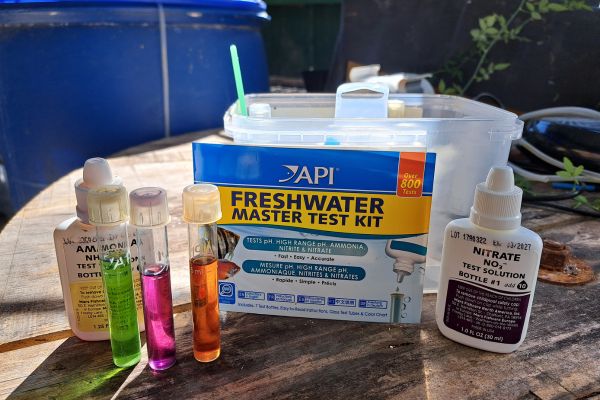
A liquid master kit, like the API Freshwater Master Test Kit, can provide over 800 individual tests across multiple water parameters.
That's not 800 complete rounds of testing, but it does mean you can get plenty of use from one kit.
While the upfront cost may be higher, master test kits can offer better long-term value, particularly if you're testing regularly.
Why Master Test Kits Are Better Value
Dropper kits (sometimes called “liquid reagent kits”) take a little more time to use, but they can provide more consistent, detailed readings when used correctly.
Each test uses a specific liquid reagent that reacts with the water sample to show precise colour changes.
When used correctly, they’re far more trustworthy—especially when you need to spot small ammonia or nitrite spikes before they harm your fish.
The Big Advantage: Accuracy
These kits are the same type used by professional aquariums, aquaculture facilities, and laboratories.
When I volunteered at a major aquarium in Australia, a lot of exhibits were tested weekly using dropper kits.
If test strips were cheaper and reliable, they absolutely would have used them—but accuracy always won out.
What Should You Test in Aquaponics?
Your master test kit should cover:
Ammonia (NH₃/NH₄⁺): Helps identify a build-up of ammonia from fish waste, uneaten food and other organic matter.
Nitrite (NO₂⁻): Helps you monitor the nitrogen cycle and identify potentially harmful nitrite build-up.
Nitrate (NO₃⁻): A nutrient plants can use, and an indicator of how nitrogen is being processed in your system.
pH: Affects fish health, beneficial bacteria and how readily plants can access nutrients.
Understanding these readings is an important part of keeping your aquaponics fish healthy, as changes in water quality can affect fish long before you notice visible signs of stress.
Tip: Before buying any test kit, check which water parameters it covers. Some test strips don't include ammonia, meaning you'll need to buy an additional test. A freshwater master kit that includes ammonia, nitrite, nitrate and pH can be a convenient way to cover the essentials.
Extra Water Tests as You Advance
Once your system is running smoothly, you might want to expand into optional tests that provide deeper insight into water quality:
Iron (Fe): Helps track nutrient levels for leafy greens.
KH (Carbonate Hardness): Measures buffering capacity to prevent pH swings.
Calcium (Ca): Important for plant structure and fish bone health.
You can add these tests later or as needed. They’re optional for beginners, but very helpful once you’re confident and fine-tuning your system.
How to Get Accurate Water Test Results Every Time
Follow the Instructions Exactly
Count every drop carefully, use the right sample size, and time the colour changes.
Keep Test Tubes Clean
Rinse test tubes thoroughly with clean water immediately after testing to remove any chemical residue. Avoid soap or detergents, and never pour used test solutions back into your aquaponics system.
Test Away From the System
Never open reagents near your fish tank. If even a small drop of chemical lands in the water, it can harm your fish or bacteria.
Old or improperly stored reagents can give inaccurate results. Check the manufacturer's expiry dates and storage instructions, and replace reagents when needed.
Stay Consistent With One Brand
Every brand uses different colour scales and chart layouts. Sticking with one helps you compare results confidently over time.
Check out this video to see common mistakes people make with their water testing: Avoid These 5 Common Water Quality Mistakes in Aquaponics
Why Consistency Is More Important Than Brand
It doesn’t really matter which brand you choose—API is simply one of the most widely available.
What matters is that you use it regularly, understand your system’s normal readings, and act quickly if something looks off.
Testing weekly, or more frequently when establishing a new system or troubleshooting problems, can help you identify water quality changes before they become serious.
Watch: Master Test Kits vs Strips for Aquaponics
Master Test Kits VS Strips for Aquaponics
Should you use dropper test kits or strips for aquaponics? This video walks through both options, explains the real cost difference, and shows which parameters matter most.
Accurate Water Testing Helps Prevent Problems
Testing your water is like taking your system’s pulse—it’s how you know your ecosystem is healthy.
Cheap strips might seem easier, but they don’t tell the full story.
Invest once in a reliable master test kit, and you’ll save yourself time, money, and stress down the track.
As always in aquaponics, prevention is better than cure—and accuracy is your best defence.
Learn More About Aquaponics
Check out the COURSES page to learn how you can get started with aquaponics now. Click HERE.
Want to get your Eyes and Hands on the FREE Online Aquaponics Essentials Course?
This is a great free resource to really understand how aquaponics is a sustainable ecosystem that will grow your organic food is a productive way.
You learn how all the 'parts' make up the 'whole', and helps to give you the foundations of understanding aquaponics.
Sign up HERE
Check out my YouTube Channel 'Candy The Aquaponics Lady'
Aquaponics is an ecosystem, and with anything it takes time to learn how it works. So, sit back and binge watch my 'how to' playlist and the 'Water Quality Made Simple' Playlist, and learn the next steps in your aquaponics system as you create the ecosystem.
Here are the next 2 videos I recommend you watching to create your ecosystem ~ before you add any fish
How Aquaponics Works as an Ecosystem
Why aquaponics is the best form of gardening for you
Learn More About Aquaponics
Check out the COURSES page to learn how you can get started with aquaponics now. Click HERE.
Want to get your Eyes and Hands on the FREE Online Aquaponics Essentials Course?
This is a great free resource to really understand how aquaponics is a sustainable ecosystem that will grow your organic food is a productive way.
You learn how all the 'parts' make up the 'whole', and helps to give you the foundations of understanding aquaponics.
Sign up HERE
Want to help out (donate some fish food) and Feed my Fish?? (They don't drink coffee)

About Candy Alexander – The Aquaponics Lady
Candy Alexander is the founder of The Aquaponics Lady, with over 20 years of hands-on experience in aquaponics and formal training in aquaculture. Her experience spans both commercial and backyard systems, from larger outdoor setups to small indoor aquariums.
Candy believes growing fresh food shouldn't require a large backyard, expensive equipment or complicated systems. Whether you have a small courtyard, rent your home, or want to turn an existing aquarium into a productive little garden, there are practical ways to get started.
Her approach is simple: start small, understand how things work, and build your confidence as you go. She's passionate about helping beginners avoid unnecessary expenses, learn to care for their fish and plants, and discover the enjoyment of growing their own food.
Through The Aquaponics Lady, Candy shares practical advice, beginner-friendly guides and lessons from her own experience, helping individuals and families make aquaponics and food gardening part of everyday life.


