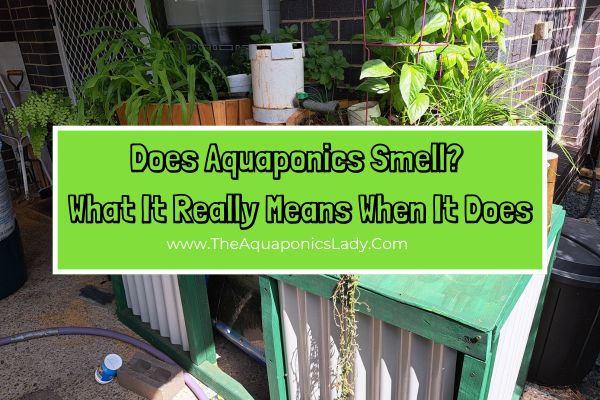
Does Aquaponics Smell? What It Really Means When It Does

This is one of the most common questions people ask when they first hear about aquaponics:
“Does Aquaponics Smell?” or “Doesn’t it smell like fish?”
The short answer is no—a properly balanced aquaponics system shouldn’t have a strong or unpleasant smell.
What you’ll notice instead is the gentle, earthy scent of damp grow media, and the delicious aroma of herbs and vegetables growing nearby.
If you ever detect a strong or unpleasant odour, it means something in your system is out of balance—and that’s a problem worth fixing quickly.
Why Aquaponics Shouldn’t Smell
It’s easy to confuse the idea of aquaponics with marine aquariums or ocean fish farms, which can smell strongly of salt and decaying organic matter.
But freshwater aquaponics is completely different.
Here’s why it stays odour-free when healthy:
Water is constantly circulating and oxygenated: Oxygen keeps the bacteria healthy and prevents waste from rotting.
Beneficial bacteria help process fish waste naturally: They convert ammonia into nitrite and then nitrate, which plants can use as a source of nitrogen.
Plants absorb excess nutrients: They act as natural filters, keeping the water clean and balanced.
So, if your aquaponics system smells fishy or rotten, something’s gone wrong.
Watch: Sniffing Out the Truth – Do Aquaponic Systems Smell?
What a Bad Smell in Aquaponics Means
If your system develops a noticeable smell, it’s a message from your ecosystem that needs attention. Here’s what it could mean:
1. Anaerobic Zones (No Oxygen)
When parts of your system—like the bottom of a grow bed or inside a filter—become oxygen-poor, anaerobic bacteria start to grow.
They break down organic waste differently, producing gases such as hydrogen sulphide, which has a distinctive rotten-egg smell.
Fix:
Increase aeration and water movement.
Check for areas where solids are accumulating.
Clean or flush the affected area carefully if needed.
Check that your pump and air stones are working properly.
2. Built-Up Solids or Uneaten Food
Fish waste, dead roots, or leftover food can collect in corners, filters, or sumps. Over time, these decompose and start to smell.
Fix:
Clean filters and sump tanks regularly.
Remove dead plant matter and trapped sludge.
Avoid overfeeding and remove any uneaten food.
3. Dead or Stressed Fish
If you experience a sudden fish death (often during hot weather or low oxygen), you’ll notice a strong, unpleasant odour within a day or two.
Fix:
Check for and remove any dead fish immediately.
Test for ammonia and nitrite spikes.
Improve aeration and shade if water temperatures are high.
4. Root Problems or Poor Oxygen Around the Roots
Plants sitting in waterlogged areas or poor drainage zones can develop root rot, which also causes a foul smell.
Fix:
Check that water is circulating properly around the roots.
Remove unhealthy or decaying roots.
If you use a flood-and-drain media bed, check that the bed is draining correctly between cycles.

How to Keep Your System Smelling Fresh
1. Keep Water Moving and Oxygenated
Stagnant water is the enemy of freshness. Use air stones or a steady water flow to maintain oxygen levels.
2. Clean Regularly, Not Rarely
Maintenance doesn’t have to be hard—just consistent.
Clean solids filters as needed and inspect grow beds regularly.
Remove excess roots, debris, or sludge.
3. Avoid Overfeeding
The less waste that breaks down in your system, the cleaner it stays.
4. Balance Your Fish and Plant Ratio
Too many fish = too much waste.
Too few plants = not enough nutrient uptake.
Finding that balance keeps your water clear and odour-free.
5. Monitor Water Quality Regularly
Weekly testing can be a useful routine for established backyard systems, with more frequent testing if something seems wrong. Regular testing helps you catch problems (like low oxygen or rising ammonia) before they become smelly surprises.
When Aquaponics Smells Like Success
A healthy aquaponics system smells like life—not decay.
You might catch whiffs of basil, mint, tomato leaves, or damp gravel. It’s clean, natural, and often described as “fresh rain on soil.”
A mild earthy scent can come from damp grow media, plants and the living environment around your system. The important thing is that it shouldn't smell strongly fishy, rotten or sulphurous. A fresh, mild smell is what you’d expect from a healthy, well-maintained system.
Watch Next: What Air Pump Do I Need for Aquaponics?
In this video, we discuss why oxygen is essential to preventing anaerobic smells, what size pump to choose, and how to keep your fish safe.
How to Stop Your Aquaponics System from Smelling
Aquaponics isn’t meant to smell like a fish farm—it’s meant to smell like a garden.
If it starts to smell bad, your system is sending you a clear signal: something isn’t getting enough oxygen, or waste isn’t being removed.
With regular checks, cleaning, and good aeration, you’ll never have to worry about unpleasant odours—just the delicious aroma of the herbs and produce you’ve grown yourself.
FAQs About Aquaponics Smells
Should aquaponics smell like fish?
No. A healthy, well-maintained aquaponics system shouldn't have a strong fishy smell. A strong odour can indicate accumulated waste, poor water quality or another maintenance issue.
Why does my aquaponics system smell like rotten eggs?
A rotten-egg smell can indicate hydrogen sulphide associated with low-oxygen conditions and decomposing organic material. Hydrogen sulphide is associated with anaerobic decomposition in aquaculture environments.
Why does my aquaponics water smell bad?
Common causes include uneaten food, accumulated fish waste, dead plant material, poor water movement, low oxygen or a dead fish.
Does an indoor aquaponics system smell?
A properly maintained indoor system shouldn't create a strong unpleasant smell. If it does, check for accumulated organic matter, uneaten food and adequate water circulation and aeration.
Learn More About Aquaponics
Check out the COURSES page to learn how you can get started with aquaponics now. Click HERE.
Want to get your Eyes and Hands on the FREE Online Aquaponics Essentials Course?
This is a great free resource to really understand how aquaponics is a sustainable ecosystem that will grow your organic food is a productive way.
You learn how all the 'parts' make up the 'whole', and helps to give you the foundations of understanding aquaponics.
Sign up HERE
Check out my YouTube Channel 'Candy The Aquaponics Lady'
Aquaponics is an ecosystem, and with anything it takes time to learn how it works. So, sit back and binge watch my 'how to' playlist and the 'Water Quality Made Simple' Playlist, and learn the next steps in your aquaponics system as you create the ecosystem.
Here are the next 2 videos I recommend you watching to create your ecosystem ~ before you add any fish
How Aquaponics Works as an Ecosystem
Why aquaponics is the best form of gardening for you
Learn More About Aquaponics
Check out the COURSES page to learn how you can get started with aquaponics now. Click HERE.
Want to get your Eyes and Hands on the FREE Online Aquaponics Essentials Course?
This is a great free resource to really understand how aquaponics is a sustainable ecosystem that will grow your organic food is a productive way.
You learn how all the 'parts' make up the 'whole', and helps to give you the foundations of understanding aquaponics.
Sign up HERE
Want to help out (donate some fish food) and Feed my Fish?? (They don't drink coffee)

Candy Alexander is a dedicated aquaponics enthusiast with a wealth of formal training in aquaculture. Over the past 15 years, Candy has been deeply immersed in both commercial and backyard aquaponics, honing her skills and expertise in this sustainable farming method.
Candy's passion lies in making aquaponics accessible to everyone. With a mission to simplify aquaponics, she believes that anyone can embark on this sustainable journey.
She encourages those new to aquaponics to "kick the tires" without a significant financial investment. Her guidance focuses on helping people start their aquaponics journey with small-scale systems, ensuring a low barrier to entry for newcomers.
Candy shares practical tips, step-by-step guides, and personal stories to inspire and guide readers on their aquaponics adventure. Whether you're a seasoned farmer or a curious beginner, Candy Alexander is your go-to source for simplifying aquaponics and fostering a sustainable gardening experience.


