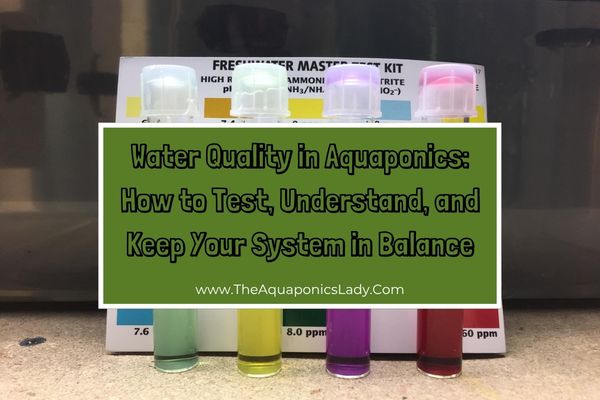
Water Quality in Aquaponics: How to Test, Understand, and Keep Your System in Balance

Why Water Quality Matters
In aquaponics, water isn’t just water—it’s the lifeblood of your entire ecosystem.
It feeds your plants, houses your fish, and supports the beneficial bacteria that make the system work.
Keeping your water balanced is the most important thing you can do to prevent fish stress, nutrient lockout, or plant deficiencies. The best part? It’s easy once you know what to look for—and testing regularly helps you catch small issues before they become big ones.
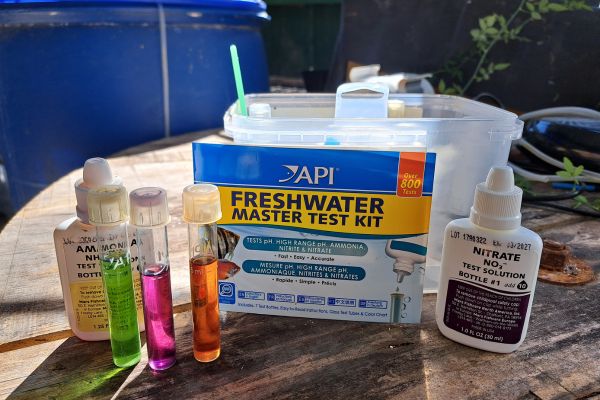
How to Test Water Quality in Aquaponics: The Big Four Water Tests
Regular water testing in aquaponics helps you catch small issues. These are the main tests every aquaponics grower should do weekly, or more often in a new system:
1. Ammonia (NH₃)
What it is: Fish waste and uneaten food break down into ammonia.
Why it matters: Ammonia is toxic to fish, even at low levels.
Safe range: 0 ppm (parts per million)
If it rises: Check your feeding amount and clean your filters. High ammonia usually means the system is overloaded or the bacteria haven’t converted it yet.
2. Nitrite (NO₂⁻)
What it is: The middle stage of the nitrogen cycle—produced as bacteria convert ammonia.
Why it matters: Nitrite is also toxic to fish.
Safe range: 0 ppm
If it rises: Your bacteria are still maturing or your biofilter needs more oxygen. Add aeration and avoid overfeeding.
3. Nitrate (NO₃⁻)
What it is: The final stage of the cycle, and the main nutrient your plants use to grow.
Safe range: 20–80 ppm for most systems.
If it’s too low: Not enough fish or over-planting.
If it’s too high: Too many fish or not enough plants to absorb nutrients.
4. pH
What it is: A measure of acidity or alkalinity in your system.
Ideal range: 6.8–7.2
Why it matters: pH affects nutrient availability and bacterial health.
High pH = nutrient lockout.
Low pH = bacteria die-off and ammonia spikes.
Tip: Use both a colour test kit and a digital pH pen, since most kits don’t read below pH 6.0.
Beyond the Basics: KH, GH, and Other Key Tests
As your system matures, you may want to expand your testing to understand the full picture.
KH (Carbonate Hardness)
What it is: Measures the buffering capacity of your water—the ability to resist pH swings.
Ideal range: 60–120 ppm.
Why it matters: Low KH means your pH will drop faster over time.
How to stabilise it: Add small amounts of potassium bicarbonate or crushed coral regularly.
GH (General Hardness)
What it is: Measures the level of calcium and magnesium in your water.
Ideal range: 50–150 ppm.
Why it matters: These minerals are essential for both fish and plant health.
How to raise it naturally: Add shell grit, eggshells, or Epsom salts (magnesium sulphate) in small doses.
Iron (Fe)
Why it matters: Essential for leafy greens and herbs—without it, new leaves turn yellow.
How to test: Iron test kits are available at most aquarium shops.
How to supplement: Add chelated iron (Fe DTPA or Fe EDDHA) monthly, especially if your pH is above 7.0.
Potassium, Magnesium, and Calcium
Why they matter: These support strong stems, healthy roots, and fruit production.
Natural sources:
Potassium: Worm juice with banana skins, or potassium bicarbonate.
Calcium: Crushed coral, eggshells, or shell grit.
Magnesium: Epsom salts.
How to monitor: You can buy aquarium test kits for each, but most people focus on symptoms and adjust naturally.
Dissolved Oxygen (DO)
What it is: The amount of oxygen available in your water.
Ideal level: Above 5 mg/L.
Why it matters: Fish, plants, and bacteria all rely on oxygen.
How to improve: Add air stones or small waterfalls to keep the water moving—especially in warm weather (above 26°C / 79°F).
The Importance of Weekly Testing
Think of testing as your system’s health check-up.
It prevents sudden ammonia or nitrite spikes before fish deaths occur.
It helps identify when your ecosystem is starting to drift out of balance.
It teaches you how your system changes with feeding, seasons, and growth.
A five-minute test once a week can save you from losing fish, crops, or months of cycling progress.
Common Water Testing Mistakes (and How to Avoid Them)
In this video, you’ll learn the most common water testing mistakes and how to avoid them:
Avoid These 5 Common Water Quality Mistakes in Aquaponics
Here are the key points covered in the video:
Not testing at all.
Problems can develop long before you notice symptoms.Doing tests incorrectly.
Always follow the instructions carefully—every drop and every timing step matters.Using dirty test tubes.
Residue or tap water can throw off your results. Rinse with system water before testing.Testing right at the tank.
Always collect your sample and test away from the system so chemicals don’t drip back into the fish tank.Not understanding the readings.
Numbers are only useful if you know what they mean. Learn your ranges so you can act early.
Water Quality Is the Key to a Healthy Aquaponics System
Water tells you everything about your system—how your fish are coping, how your plants are feeding, and how your bacteria are thriving.
Testing doesn’t need to be complicated or expensive. Once you get into the habit, it becomes second nature.
Remember: prevention is always better than cure.
When you test weekly, you don’t just maintain water—you maintain balance, stability, and life.
Learn More About Aquaponics
Check out the COURSES page to learn how you can get started with aquaponics now. Click HERE.
Want to get your Eyes and Hands on the FREE Online Aquaponics Essentials Course?
This is a great free resource to really understand how aquaponics is a sustainable ecosystem that will grow your organic food is a productive way.
You learn how all the 'parts' make up the 'whole', and helps to give you the foundations of understanding aquaponics.
Sign up HERE
Check out my YouTube Channel 'Candy The Aquaponics Lady'
Aquaponics is an ecosystem, and with anything it takes time to learn how it works. So, sit back and binge watch my 'how to' playlist and the 'Water Quality Made Simple' Playlist, and learn the next steps in your aquaponics system as you create the ecosystem.
Here are the next 2 videos I recommend you watching to create your ecosystem ~ before you add any fish
How Aquaponics Works as an Ecosystem
Why aquaponics is the best form of gardening for you
Learn More About Aquaponics
Check out the COURSES page to learn how you can get started with aquaponics now. Click HERE.
Want to get your Eyes and Hands on the FREE Online Aquaponics Essentials Course?
This is a great free resource to really understand how aquaponics is a sustainable ecosystem that will grow your organic food is a productive way.
You learn how all the 'parts' make up the 'whole', and helps to give you the foundations of understanding aquaponics.
Sign up HERE
Want to help out (donate some fish food) and Feed my Fish?? (They don't drink coffee)

Candy Alexander is a dedicated aquaponics enthusiast with a wealth of formal training in aquaculture. Over the past 15 years, Candy has been deeply immersed in both commercial and backyard aquaponics, honing her skills and expertise in this sustainable farming method.
Candy's passion lies in making aquaponics accessible to everyone. With a mission to simplify aquaponics, she believes that anyone can embark on this sustainable journey.
She encourages those new to aquaponics to "kick the tires" without a significant financial investment. Her guidance focuses on helping people start their aquaponics journey with small-scale systems, ensuring a low barrier to entry for newcomers.
Candy shares practical tips, step-by-step guides, and personal stories to inspire and guide readers on their aquaponics adventure. Whether you're a seasoned farmer or a curious beginner, Candy Alexander is your go-to source for simplifying aquaponics and fostering a sustainable gardening experience.


