Is No-Dig Gardening Really Better? Pros, Cons, and Practical Tips

If you’ve ever spent a Saturday afternoon turning over clay soil with a shovel and thought, there must be an easier way, you’re not alone.
More and more gardeners are swapping spades for mulch and taking up no-dig gardening, a simple, soil-building method that promises fewer weeds, healthier plants, and less back pain.
But is it really better than traditional digging? Let’s dig into it (pun intended).
What Is No-Dig Gardening and How Does It Work?
At its heart, the no-dig gardening method is about working with the soil instead of against it.
Instead of disturbing the soil structure by turning it over each season, you layer organic materials on top, compost, mulch, and plant matter, and let nature do the rest.
Worms, microbes, and fungi slowly break it all down, building rich, crumbly soil without you ever needing to dig.
Think of it like making lasagne, but instead of pasta and cheese, you’re layering compost, leaves, and straw. The end result? A nutrient-dense soil that practically feeds itself.
Why So Many Gardeners Love No-Dig Gardening
1. Healthier Soil, Healthier Plants
Every time you dig, you break apart delicate fungal networks and disturb the microscopic ecosystem living underground.
In a no-dig vegetable garden, those networks stay intact, allowing soil life to thrive, and healthy soil life means strong, resilient plants.
2. Fewer Weeds
By covering the soil surface with layers of compost and mulch, you block light from reaching weed seeds. Over time, the weed population drops dramatically.
3. Better Moisture Retention
Thick mulch acts like a sponge, helping soil hold onto water longer and stay cool during hot days, a huge bonus in Australian summers.
4. Less Physical Strain
No more back-breaking digging or turning over heavy soil. You simply add new layers each season and let gravity and soil biology do the work.
5. Improves Over Time
No-dig gardens get better the longer they’re left undisturbed.
Each year, the soil becomes richer, darker, and more alive.
The Potential Downsides of No-Dig Gardening
Like any gardening method, no-dig gardening isn’t perfect, and it’s helpful to go in with clear expectations.
You’ll Need More Organic Material at the Start
Creating those thick layers can take a surprising amount of good-quality compost and mulch. You can build it up gradually, but the first setup is often the most resource-heavy stage.
Mulch Layers Can Attract Pests
Heavy mulch can sometimes invite slaters, earwigs, or ants. Keep an eye out and adjust your layers if pests begin to appear.
No-Dig Gardens Take Time to Establish
A brand-new no-dig garden bed can take a few months before it truly settles. In the meantime, choose hardy, fast-growing crops like beans or lettuce to get things going.
The Garden May Look Less Structured
If you’re used to perfectly straight rows and bare soil between plants, a no-dig garden might feel a little wild at first, but that’s part of its charm.
How to Start a No-Dig Garden (Step-by-Step)
Starting a no-dig vegetable garden is simpler than most people expect.
Choose your spot — anywhere with good light will do, even on top of grass or clay.
Lay a weed barrier — cardboard or thick newspaper works well (remove any tape).
Add layers:
5–10 cm of compost
10 cm of straw, sugarcane mulch, or lucerne
Alternate layers if possible — compost, mulch, compost, mulch
Water as you go — moisture helps layers settle and begin to break down.
Plant directly into the top layer — either seedlings or seeds, depending on the crop.
Top up each season — add compost or mulch whenever the surface looks bare.
Over time, you’ll have soft, dark soil underneath that’s perfect for root crops and thriving vegetables.
Aquaponics: A Soil-Free Alternative to No-Dig Gardening
For gardeners who struggle with poor soil, rocky ground, or limited space, soil itself can be the biggest challenge.
That is my problem. I live in a house built into a small mountain; it is all shale, and there is no soil at all.
That’s where aquaponics steps in as a completely different approach to growing food.
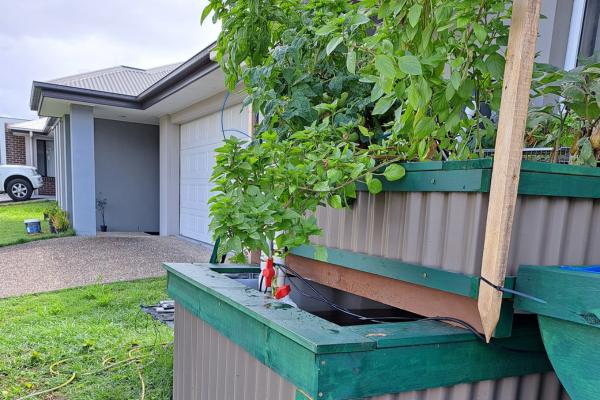
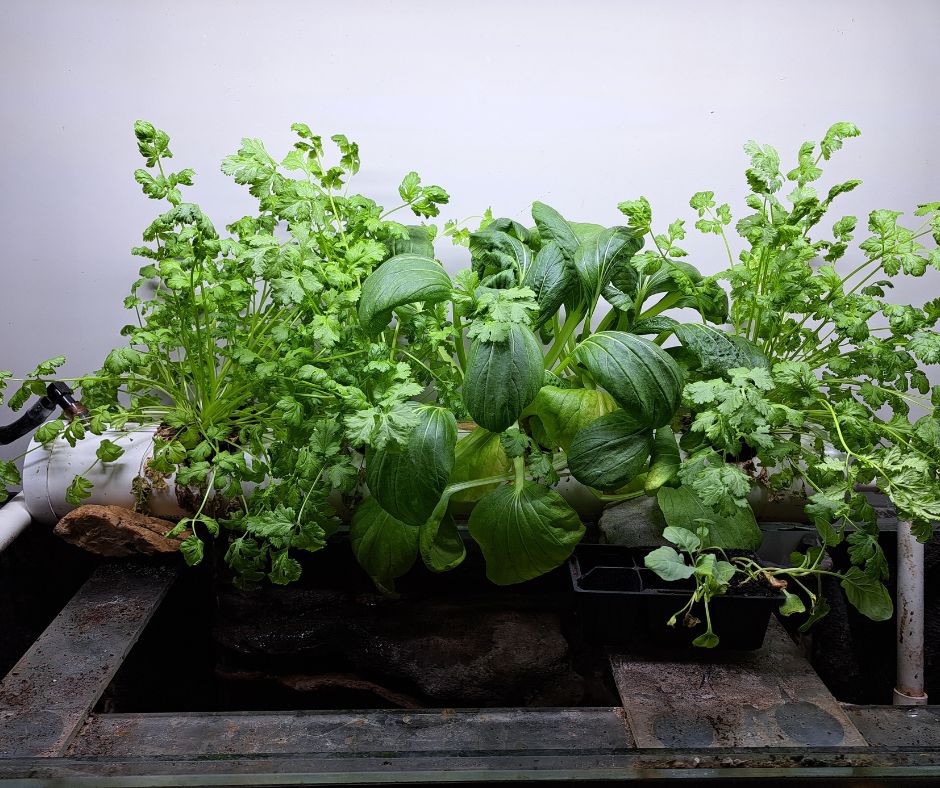
In aquaponics, plants grow in water instead of soil. Fish waste provides nutrients, and the plants clean the water in return. There’s no digging, no soil compaction, and no need to buy endless bags of mulch or compost.
It’s a self-contained system that can grow greens, herbs, and even fruiting crops year-round. It’s ideal for renters, balcony gardeners, or anyone who wants to grow food sustainably without wrestling with the earth.
The best part? In the 17 years I’ve been practising aquaponics, I have never needed to weed, and I grow around 80% of my food.
So whether you prefer building up living soil or floating your plants above it, the goal is the same: healthy food grown with respect for nature’s systems.
Curious About Growing Food Without Soil?
If the idea of no digging, no weeds, and growing food sustainably sounds appealing, aquaponics might be worth exploring.
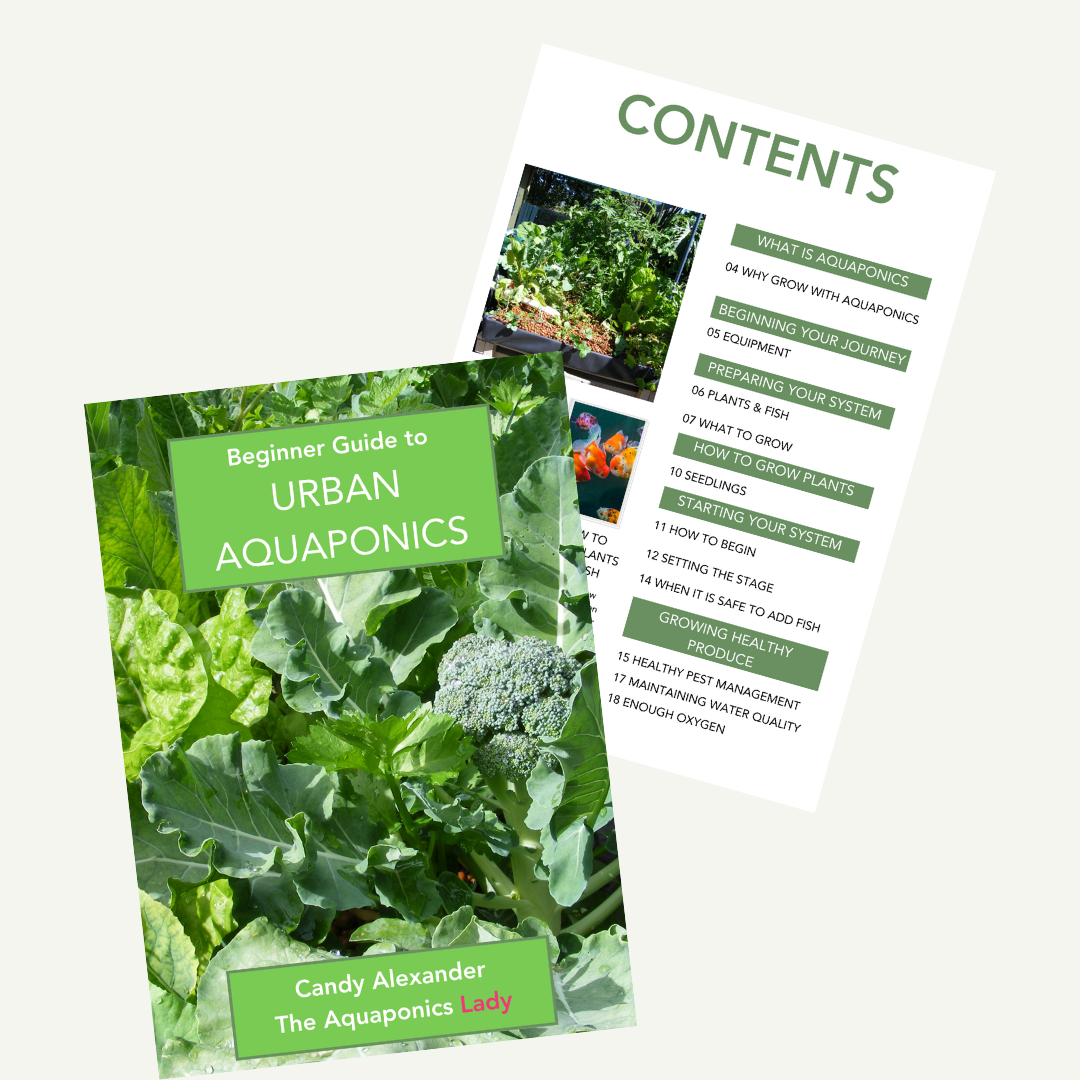
Download your free copy of the Urban Aquaponics eBook to learn whether aquaponics is the right fit for you and discover the basics of how this soil-free system works.
Inside, you’ll learn how aquaponics combines fish, plants, and natural biology to grow fresh food in a simple, sustainable way, even if your garden space is small or your soil is less than ideal.
Get inspired to start your journey today.
Get your Free copy HERE
Growing Food the Way Nature Intended
No-dig gardening is proof that sometimes the best approach is simply to step back and let nature do what it does best.
By protecting the soil ecosystem instead of constantly disturbing it, you create a thriving garden that becomes richer and more productive over time, without the heavy lifting.
It’s not the only way to grow food, but it’s one of the gentlest and most forgiving.
And if digging isn’t your thing at all, aquaponics offers another path entirely, a clean, water-wise system that can produce abundant food without ever turning a shovel.
Either way, the destination is the same: healthy plants, thriving ecosystems, and food you can proudly grow yourself.
Learn More About Aquaponics
Check out the COURSES page to learn how you can get started with aquaponics now. Click HERE.
Want to get your Eyes and Hands on the FREE Online Aquaponics Essentials Course?
This is a great free resource to really understand how aquaponics is a sustainable ecosystem that will grow your organic food is a productive way.
You learn how all the 'parts' make up the 'whole', and helps to give you the foundations of understanding aquaponics.
Sign up HERE
Check out My YouTube Channel 'Candy The Aquaponics Lady'
Aquaponics is an ecosystem, and with anything it takes time to learn how it works. So, sit back and binge watch my 'how to' playlist and the 'Water Quality Made Simple' Playlist, and learn the next steps in your aquaponics system as you create the ecosystem.
Here are the next 2 videos I recommend you watching to create your ecosystem ~ before you add any fish
How Aquaponics Works as an Ecosystem
Why Aquaponics is the best, and most sustainable form of gardening in small spaces
Learn More About Aquaponics
Check out the COURSES page to learn how you can get started with aquaponics now. Click HERE.
Want to get your Eyes and Hands on the FREE Online Aquaponics Essentials Course?
This is a great free resource to really understand how aquaponics is a sustainable ecosystem that will grow your organic food is a productive way.
You learn how all the 'parts' make up the 'whole', and helps to give you the foundations of understanding aquaponics.
Sign up HERE
Want to help out and Feed my Fish?? (They don't drink coffee)

Candy Alexander is a dedicated aquaponics enthusiast with a wealth of formal training in aquaculture. Over the past 15 years, Candy has been deeply immersed in both commercial and backyard aquaponics, honing her skills and expertise in this sustainable farming method.
Candy's passion lies in making aquaponics accessible to everyone. With a mission to simplify aquaponics, she believes that anyone can embark on this sustainable journey.
She encourages those new to aquaponics to "kick the tires" without a significant financial investment. Her guidance focuses on helping people start their aquaponics journey with small-scale systems, ensuring a low barrier to entry for newcomers.
Candy shares practical tips, step-by-step guides, and personal stories to inspire and guide readers on their aquaponics adventure. Whether you're a seasoned farmer or a curious beginner, Candy Alexander is your go-to source for simplifying aquaponics and fostering a sustainable gardening experience.


