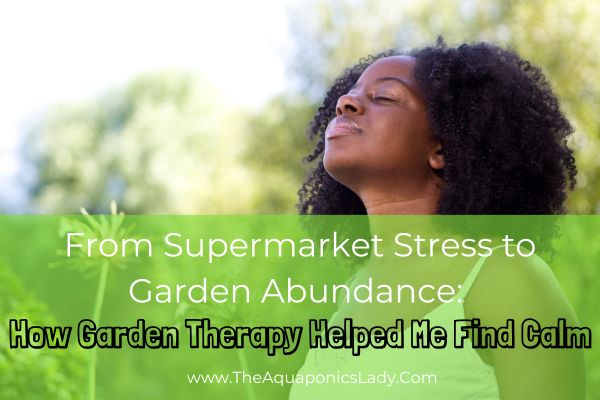
From Supermarket Stress to Garden Abundance: How Garden Therapy Helped Me Find Calm
How growing food at home helped me replace chaos with calm.
I used to think the supermarket was just part of life — a chore everyone had to face. But for me, it was never just a quick trip. It was fluorescent lights, echoing noise, and aisles that seemed to hum with tension. The sound of trolleys scraping on tiles, the beeping of registers, the rush of people moving too fast — all of it collided in my nervous system until I felt frayed at the edges.
By the time I’d leave, my heart would be racing. My body would ache from holding itself tense. Sometimes I’d sit in the car, hands on the steering wheel, and just breathe until the world stopped spinning.
For a long time, I thought that was normal. I told myself that everyone gets stressed, that it’s just the price of getting things done. But deep down, I knew it wasn’t just stress. It was sensory overload — a nervous system pushed past its limits, again and again.
And then I started growing my own food.
Growing My Own Food Changed More Than My Meals
At first, it was practical. I wanted to save money, to eat fresher produce, to feel a little more independent. But what I didn’t expect was the deep sense of peace it brought — how it changed the way I felt about nourishment altogether.
The difference between standing in a crowded store and standing in my garden is almost indescribable. In one, everything feels rushed. In the other, everything slows down.
In the garden, the air moves softly instead of buzzing. The light shifts gently instead of glaring. I can feel the warmth of the sun on my shoulders, hear the trickle of water, and breathe in something clean and real. There’s no music, no advertisements, no decision fatigue. Just life, in rhythm.
And that rhythm became therapy.
How Aquaponics Became a Form of Garden Therapy
In aquaponics, feeding the fish is quiet. The water moves at its own pace. The plants respond to care in their own time. I don’t have to rush, compare, or perform — I just have to show up. The garden doesn’t demand perfection; it meets you where you are.
There’s something deeply sensory about it — the cool brush of water against your hands, the smell of damp leaves, the texture of growing media under your fingertips. Each small interaction brings your body back to the present moment. It’s a full-body exhale after too many days of holding your breath.
Garden Therapy Isn’t Just for Trauma or Sensory Overload
Garden therapy is not just for people with PTSD or sensory sensitivities — it’s for anyone who feels stretched too thin. Parents with kids pulling at them, workers juggling too much, people rushing from one obligation to the next. The garden becomes a place where time loosens its grip. Even ten minutes outside can soften a day that’s been running too fast.
There are days when I still need to go to the supermarket, but the relationship has changed. It’s no longer my only option. When I walk past the aisles now, I see what I used to rush to buy — herbs, greens, vegetables — and I smile knowing they’re already growing at home. That small shift brings so much relief. I don’t have to push through the noise every time I need a meal.
And the food I grow tastes different. Not just fresher — calmer. It carries the energy of where it came from: still mornings, running water, quiet care. It’s food grown without rush, and it carries that same gentleness into my body.
Growing Food Can Nourish More Than Your Body
Gardening, especially aquaponics, has taught me that nourishment isn’t only about what you eat. It’s about how it feels to get there. Supermarket shopping often left me depleted before I even cooked the meal. Gardening fills me before I take a single bite.
What Is Garden Therapy?
Garden therapy is the use of gardening and time spent around plants and growing spaces to support wellbeing, relaxation, connection, and mindfulness. For me, aquaponics became my version of it — a quiet place where caring for fish and plants helped me slow down and reconnect with the present moment.
I think that’s the heart of garden therapy — it’s not just about the plants. It’s about how the environment shapes your body’s response. In the garden, your senses aren’t fighting the world — they’re aligning with it. The sights, sounds, smells, and textures all work together to help my nervous system settle and remind me what safety feels like.
Finding Calm in the Garden
Now, when the world feels overwhelming, I go outside. I feed the fish, brush my fingers through the leaves, listen to the water flow. I don’t always have time for long meditations or big routines — but I can always make time for a few minutes in the garden.
And in those minutes, everything changes.
The noise fades. The pace slows. My breath steadies. I come back into myself — grounded, calm, and nourished.
I used to dread the stress of getting food. Now, I look forward to it. Because the act of growing has become part of the healing.
Food still fills my plate.
But the peace I grow along the way fills something much deeper.
Are you interested in reading about how I worked through PTSD and Anxiety with the help of Aquaponics?

It was the most amazing thing to be able to see the connection between myself, and an aquaponics system and with that find a way to let go of the unhealthy thoughts and trauma that were plaguing me. I also found that working with my aquaponics garden helped with emotional regulation.
Get your digital copy of my Aquaponics Book here
Spend time with me on YouTube 'Candy The Aquaponics Lady'
Aquaponics is a living ecosystem, and like any system that supports balance, it invites you to slow down, observe, and learn at your own pace. Sometimes that learning is practical. Sometimes it’s reflective. Often, it’s both.
If you’re drawn to the calming, grounding side of aquaponics, you might enjoy these playlists:
Garden Therapy with Aquaponics & ASMR
A quiet, sensory-focused playlist designed for moments when you need calm, regulation, or simply time to breathe alongside a living system.Life Lessons from an Aquaponics System
Reflections on what aquaponics can teach us about balance, patience, change, and care, both in the garden and in life.
If you’re still wondering whether aquaponics is the right fit for you, this playlist can help you explore that question gently and honestly:
Is Aquaponics Right for Me?
A thoughtful look at what aquaponics involves, who it suits, and how to know if it aligns with where you are right now.
And when you’re ready to get hands-on, you can move into the practical side with my core learning playlists:
These walk you step by step through building and understanding your aquaponics system, helping you create a balanced ecosystem that supports both plants and fish.
Want to get started and find your balance?
Get your eyes and hands on the FREE Online Aquaponics Essentials Course.
This free course is designed to help you understand aquaponics as a sustainable ecosystem, and how working with that system can support both food production and a sense of balance. You’ll learn the essentials of growing organic food in a way that’s productive, practical, and grounded in how nature works.
You’ll also see how all the “parts” come together to make a whole system, giving you a solid foundation for understanding aquaponics at your own pace.

Candy Alexander is a dedicated aquaponics enthusiast with over 15 years of hands-on experience in both commercial and backyard aquaponics, supported by formal training in aquaculture.
Her passion lies in making aquaponics accessible and unintimidating to everyone. Candy believes that anyone can begin this journey, slowly, affordably, and without pressure, by starting with small-scale systems and learning how the ecosystem responds.
Through practical tips, step-by-step guidance, and personal stories, Candy helps people understand aquaponics not just as a way to grow food, but as a living system that rewards patience, observation, and care. Whether you're a curious beginner or a seasoned grower, Candy is here to help you simplify aquaponics and build a sustainable garden at home.


