Biofilters in Aquaponics: What They Do and How to Build One on a Budget

What Is a Biofilter and Why Is It So Important?
A biofilter is the heart of your aquaponics system. It provides a dedicated home for the beneficial bacteria that make the nitrification cycle work.
Their job is to convert ammonia from fish waste into nitrite and then into nitrate, which your plants can safely use as food. Without a biofilter, your system can’t stay balanced—ammonia builds up, fish become stressed, and plants struggle to thrive.
In nature, bacteria colonise riverbeds and pond edges. In aquaponics, we recreate that same process in a man-made design using surfaces where bacteria can attach and grow.
Do all aquaponics systems need a separate biofilter?
No. Media-based aquaponics systems often use the grow bed itself for biological filtration. NFT and DWC systems, however, generally require a separate biofilter because they don't have the same amount of grow media available for beneficial bacteria.
Grow Beds: The Natural Biofilter
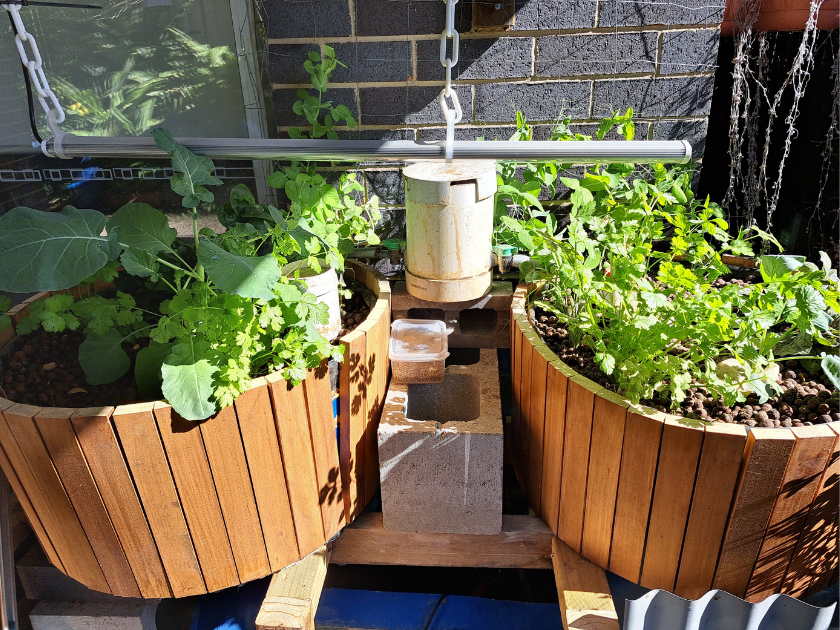
If you have a media-based system (using gravel or expanded clay balls), your grow bed itself is the biofilter.
Each piece of media provides surface area for bacteria to colonise. As water flows through the grow bed, the bacteria convert waste while the plants absorb nutrients.
This design is simple, natural, and efficient, and in many small or appropriately stocked media-based systems, you may not need a separate biofilter.
Tip: Keep your media clean but never rinse it with tap water—chlorine kills beneficial bacteria. Always rinse gently in system water if needed.
When You Need a Separate Biofilter
If you’re running an NFT (Nutrient Film Technique) or DWC (Deep Water Culture) system, you don’t have a large media-filled grow bed providing dedicated surface area for your bacteria.
That means you’ll generally need a separate biofilter to give those bacteria enough room to colonise and process the system’s waste.
Without it, the water might circulate well—but it won’t actually convert the ammonia into fertiliser.
DIY Biofilters: How to Build One Cheaply
You don’t need expensive gear to create a great biofilter. All you need is surface area and steady water flow.
Here are a few simple, low-cost options:
1. Shade Cloth Layers
Cut sheets of shade cloth and stack them inside a bucket or plastic tub.
Water flows through the layers, giving bacteria plenty of surface to colonise.
Easy to clean, lightweight, and great for small systems.
2. Plastic Mesh or Bird Netting
Crumple netting into a barrel or tub to create a large surface area.
Works similarly to shade cloth—simple, effective, and cheap.
3. Filter Media (Bioballs or K1 Media)
Commercial options designed for aquaculture.
Ideal for larger systems or if you want a professional setup.
Keep them aerated and moving gently for best results.
4. Repurposed Materials
Cut-up drinking straws, bottle caps, or recycled plastic scrubbing pads can also work (though be aware ~ microplastics can get into your system, and they can break down quickly).
The goal is maximum surface area and water contact.
Where to Place the Biofilter
Your biofilter should sit after the mechanical (solids) filter and before the plants.
Typical flow order:
Fish tank → Solids filter (RFF [Radial Flow Filter] or swirl separator) → Biofilter → Grow beds or NFT/DWC → Return to fish tank.
This order ensures that:
Solids are removed before reaching the biofilter (to avoid clogging).
Clean, oxygenated water reaches your plants.
The biofilter stays healthy and active.
Biofilter vs Solids Filter: What's the Difference?
It’s easy to confuse the two, but they serve very different purposes:
You’ll often need both mechanical and biological filtration if you’re running NFT or DWC. In a media-based system, the grow bed can perform much of the biological filtration while also trapping some solids, although additional solids filtration may still be useful depending on the size and stocking level of your system.
Want to See the Difference?
If you're more of a visual learner, this video explains the difference between a Radial Flow Filter (RFF) and a Solids Separator in an aquaponics system.
Keeping Your Biofilter Healthy
1. Keep Water Flow Consistent
Bacteria need oxygen and steady flow to survive. Don’t leave your biofilter without water flow or oxygen for long periods. In most recirculating aquaponics systems, pumps and aeration need to operate continuously.
2. Maintain Oxygen Levels
Add an air stone near or inside the biofilter—beneficial bacteria are aerobic and will die without oxygen.
3. Avoid Chlorine and Chemical Additives
Always use dechlorinated water when topping up or cleaning.
4. Don’t Overclean
A slimy coating is good—it’s your bacterial colony! Only rinse if it becomes clogged or water flow slows.
How to Know It’s Working
Ammonia and nitrite levels stay at or close to 0 ppm.
Nitrate is present at a manageable level for your fish and plants.
Fish appear healthy and the water smells clean and earthy.
If you see an unexpected ammonia spike, check your feeding, fish load, water flow, aeration and solids build-up as well as whether your biofilter has enough biological surface area.
Watch This Next: What Type of Filter Does Aquaponics Need for Beginners | Solids and Biological
In this video, I show the difference between solids filters and biofilters, how grow beds act as natural biofilters, and simple ways to add one to your system.
The Quiet Powerhouse of Aquaponics
Your biofilter is invisible, silent, and absolutely essential. It’s the unseen bridge between your fish and your plants—the part that turns waste into growth.
Whether it’s your grow bed, a stacked shade cloth filter, or a barrel full of bioballs, your biofilter is what keeps your system alive and balanced.
Take care of it, keep it oxygenated, and it will take care of everything else.
Learn More About Aquaponics
Check out the COURSES page to learn how you can get started with aquaponics now. Click HERE.
Want to get your Eyes and Hands on the FREE Online Aquaponics Essentials Course?
This is a great free resource to really understand how aquaponics is a sustainable ecosystem that will grow your organic food is a productive way.
You learn how all the 'parts' make up the 'whole', and helps to give you the foundations of understanding aquaponics.
Sign up HERE
Check out my YouTube Channel 'Candy The Aquaponics Lady'
Aquaponics is an ecosystem, and with anything it takes time to learn how it works. So, sit back and binge watch my 'how to' playlist and the 'Water Quality Made Simple' Playlist, and learn the next steps in your aquaponics system as you create the ecosystem.
Here are the next 2 videos I recommend you watching to create your ecosystem ~ before you add any fish
How Aquaponics Works as an Ecosystem
Why aquaponics is the best form of gardening for you
Learn More About Aquaponics
Check out the COURSES page to learn how you can get started with aquaponics now. Click HERE.
Want to get your Eyes and Hands on the FREE Online Aquaponics Essentials Course?
This is a great free resource to really understand how aquaponics is a sustainable ecosystem that will grow your organic food is a productive way.
You learn how all the 'parts' make up the 'whole', and helps to give you the foundations of understanding aquaponics.
Sign up HERE
Want to help out (donate some fish food) and Feed my Fish?? (They don't drink coffee)

Candy Alexander is a dedicated aquaponics enthusiast with a wealth of formal training in aquaculture. Over the past 15 years, Candy has been deeply immersed in both commercial and backyard aquaponics, honing her skills and expertise in this sustainable farming method.
Candy's passion lies in making aquaponics accessible to everyone. With a mission to simplify aquaponics, she believes that anyone can embark on this sustainable journey.
She encourages those new to aquaponics to "kick the tires" without a significant financial investment. Her guidance focuses on helping people start their aquaponics journey with small-scale systems, ensuring a low barrier to entry for newcomers.
Candy shares practical tips, step-by-step guides, and personal stories to inspire and guide readers on their aquaponics adventure. Whether you're a seasoned farmer or a curious beginner, Candy Alexander is your go-to source for simplifying aquaponics and fostering a sustainable gardening experience.


