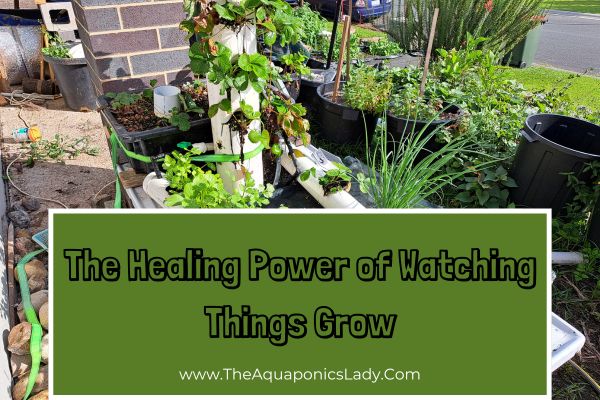
The Healing Power of Watching Things Grow
How quiet moments beside a thriving garden can bring life back to your senses.
Sometimes the world feels so fast it blurs. One moment blends into the next, and you realise you’ve been holding your breath for days without noticing. For a long time, that was how I lived, in survival mode, rushing from one task to another, disconnected from my body, my breath, and the small, living things around me.
It wasn’t until I started slowing down long enough to truly watch things grow that I began to feel the world, and myself, come back into focus.
How Aquaponics Became My Unexpected Teacher
Aquaponics became my teacher in that way. What began as a simple project to grow food slowly became a form of garden therapy I didn’t know I needed.
It started with curiosity about sustainable living and small-space gardening. But over time, it became something deeper. The system carried its own rhythm, and when I paid attention, it gently pulled me out of my head and into the present.
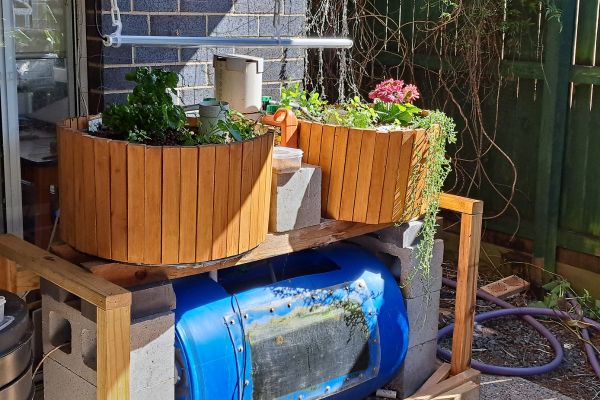
Every sound and movement within that system carried its own quiet language: the ripple of water through the pipes, the soft hum of the pump, the flicker of silver fish weaving through sunlight, and the stillness of plants stretching upward, trusting the unseen.
In aquaponics, you cannot rush the balance. The bacteria, the plants, and the fish all work together in their own time.
Learn all about how the aquaponics system balances itself through the nitrification cycle.
The more I understood that balance, the more I began to understand something about myself.
Growing Broccoli in Aquaponics – A Lesson in Trust
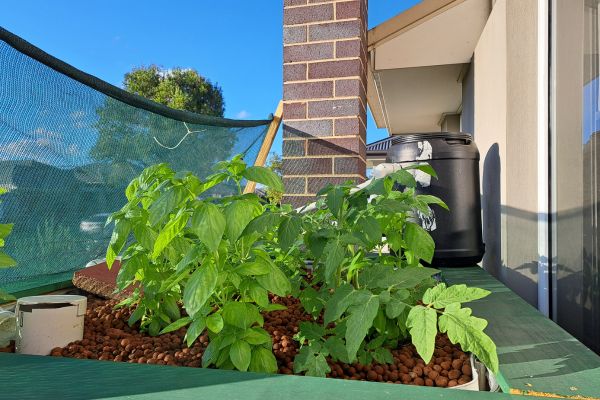
At first, I grew the basics: lettuce, basil, and a few tomatoes. Easy things. Quick to sprout. Familiar.
But one season, I decided to try something different. Broccoli.
Everyone told me broccoli was too nutrient-hungry for aquaponics. Too slow-growing. Too fussy. It supposedly wouldn’t form proper heads. But I wanted to see for myself.
The seedlings looked so small when I placed them into the grow bed. Fragile. Almost lost among the gravel. I checked them every day, watching for signs of struggle.
And then, slowly, something changed.
The stems thickened. The leaves darkened to a deep, steady green. Each day, they held themselves a little taller.
By the time the heads began to form, I realised I had something extraordinary. Not just a few vegetables for dinner, but an entire grow bed filled with thriving aquaponics broccoli. Real food. Enough to share with neighbours. Enough to offer kindness.
That harvest felt like a homecoming.
I had built something that fed both body and spirit.
And watching it grow reminded me that resilience through nature is not dramatic. It is steady. It is patient. It unfolds in its own time.
Why Watching Plants Grow Supports Mental Health
There is something profoundly healing about watching growth unfold.
For anyone navigating anxiety recovery, burnout, or trauma recovery, aquaponics offers a steady, living reminder that growth does not need to be rushed.
Healing through gardening teaches you to slow down. To listen. To allow things to develop without forcing them.
In aquaponics, balance is everything. If you push too hard, overfeed, over-adjust, or constantly interfere, the system shows you. Stability returns when you step back and trust the process.
That lesson rippled into the rest of my life.
I stopped demanding instant change from myself. I started noticing small shifts: a calmer morning, an easier breath, a gentler thought. Growth was not always visible, but it was happening beneath the surface, quietly, like roots anchoring deeper.
This is where aquaponics and mental health intersect. Not in grand transformations, but in consistent, mindful tending.
The Sensory Grounding Power of Gardening
The sensory part of gardening became part of my recovery. It became a form of sensory grounding that brought me back into my body when my thoughts drifted too far.
The smell of damp clay after rain.
The soft resistance of roots as I transplanted seedlings.
The cool brush of water against my hands when I cleaned the filters.
These small sensations anchored me in the present.
If you’ve ever experienced how gardening can regulate your nervous system, you’ll understand the quiet strength of mindful gardening. It is not loud. It does not demand attention. It simply invites you to notice.
Read all about how aquaponics supports emotional regulation.
Even the fish play a role in that grounding. If you’re wondering which fish are best to get for your new setup, read all about choosing the right fish for your aquaponics system.
Watching them move slowly through filtered light is its own kind of meditation.
Healing Happens in Small, Sustainable Rhythms
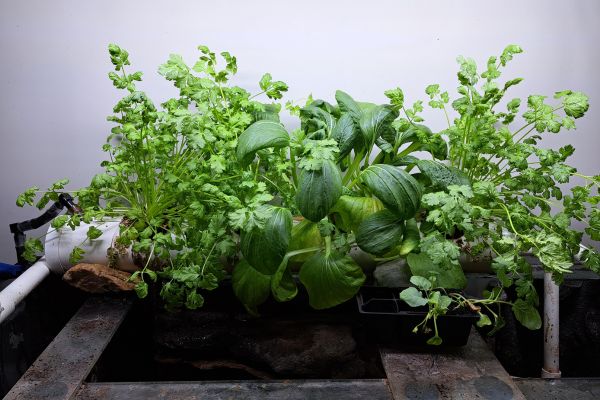
Sometimes I stand beside the system at dusk, watching the light shift across the water, and I realise this is where healing happens.
Not in a rush of transformation.
Not in dramatic breakthroughs.
But in the quiet noticing of what is alive.
That broccoli harvest was years ago, but I still remember handing fresh produce to neighbours. Their surprise that something so abundant came from recycled tanks and bathtubs.
It wasn’t just about food.
It was about connection. About showing that even in small spaces and uncertain times, growth is possible.
If you’re new to aquaponics, the best way is to start small with aquaponics.
There is a simple kind of magic in watching life grow. It does not shout its progress. It unfolds quietly until one day you realise it has become something strong, nourishing, and full of promise.
And perhaps that is what healing really is.
The slow, steady act of tending to life.
Until one day you look up and see that something inside you has bloomed, too.
When Healing Begins With Something Small

If this story resonated with you, you may find comfort in reading more about how aquaponics supported my own journey through anxiety, PTSD, and emotional regulation.
My Invisible Therapistexplores the quiet relationship between healing and living systems, how working with an aquaponics garden became a grounding practice during times of overwhelm, and a way to gently let go of patterns that no longer served me.
Get your digital copy of my Aquaponics Book here


